Fits
Good Acrylic Roof
- Slope
- Pitched panels, clear runoff
- Water
- Dries within hours of rain
- Existing finish
- Sound paint or bare primed steel
- Schedule
- Late spring to early fall days
- Result
- White film built up in passes
As an Allentown acrylic roof coating contractor, we roll and spray water-based acrylic over prepared metal roofs that drain well, pass by pass.
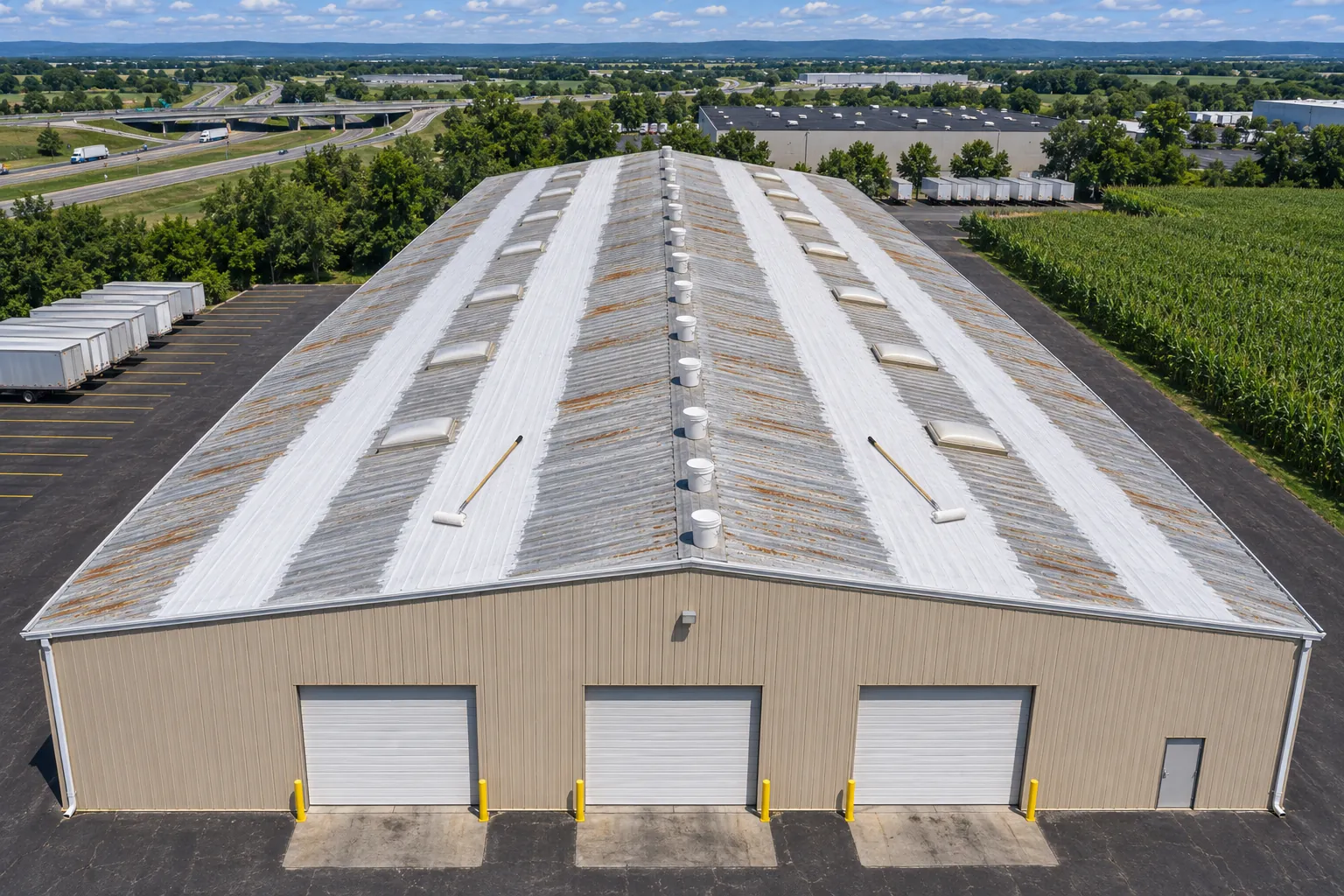
Allentown acrylic roof coating needs runoff and dry weather. This side-by-side shows a roof that fits and one that should look elsewhere.
Acrylic is a thinner, water-based film, so the work under it has to be right. These conditions get handled first.
Paint bubbles hide rust that keeps spreading. We scrape and brush those areas to firm steel and prime them before acrylic touches the panel. Primer is matched to the acrylic product used.
Side laps run the full length of each rib. Sealant and reinforcement go in there first, because acrylic alone will not hold a working lap closed. Fabric goes into the first pass across each lap.
Screw heads stand proud of the panel, and thin film around them wears quickly. Each one gets a sealant cap so coverage holds at the high point. Caps cure before the first full pass of coating.
Water that sits softens acrylic. Any area that holds rain gets corrected or switched to a silicone detail. Small dips get a silicone patch tied into the field.
Chalk on an aging finish keeps new coating from bonding. Pressure washing and an adhesion test come before the first pass. Washing removes the chalk so coating can bond to the old finish.
Acrylic needs warm days and nights above its minimum to cure. Fall work stops before the season turns, and nothing goes down before dew forms. Spring and early fall days get checked against the roof surface temperature.
Acrylic systems change with the panel and finish underneath. These are the variations we price.
Factory-painted panels that still hold their paint get washed, spot-primed, and coated in two or more passes. Paint that flakes gets scraped first.
Heavier rust areas get cleaned and primed with rust-inhibiting primer, then built up with extra film. Primer dries fully before the first acrylic pass.
Polyester fabric bedded in acrylic across side laps, end laps, and ridge caps where the roof moves. Ridge caps get fabric along their full length.
An older acrylic roof is washed, tested, and recoated with acrylic to restore lost thickness. Silicone areas are never recoated with acrylic.
A bright topcoat for buildings where heat gain through dark steel is a complaint from the floor. The finish brightens the roof surface the most in summer.
On a roof that drains well, acrylic seals the leak points and brightens the surface without heavy material weight.
Call us before the rust works through. Surface rust on firm steel is the stage when coating does the most good.
Each acrylic job goes through these calls, in order, before the first pass.
Rust, laps, fasteners, flashing, runoff paths, and the condition of the paint or coating already there. Low spots get marked on the plan.
Acrylic needs runoff. Sections that hold water are fixed or detailed with silicone so the acrylic field stays dry between storms.
The product sheet sets the dry film thickness. We plan passes to reach it over ribs and fasteners, where film runs thinnest.
Roof surface temperature, humidity, and the chance of rain or dew decide each day. Shaded sections can lag behind sunny ones.
Wet film readings during application and dry checks afterward confirm thickness over ribs and fasteners. Thin areas get another pass on the next good day.
Parts of the same building sometimes need a different system. These services pair with acrylic.
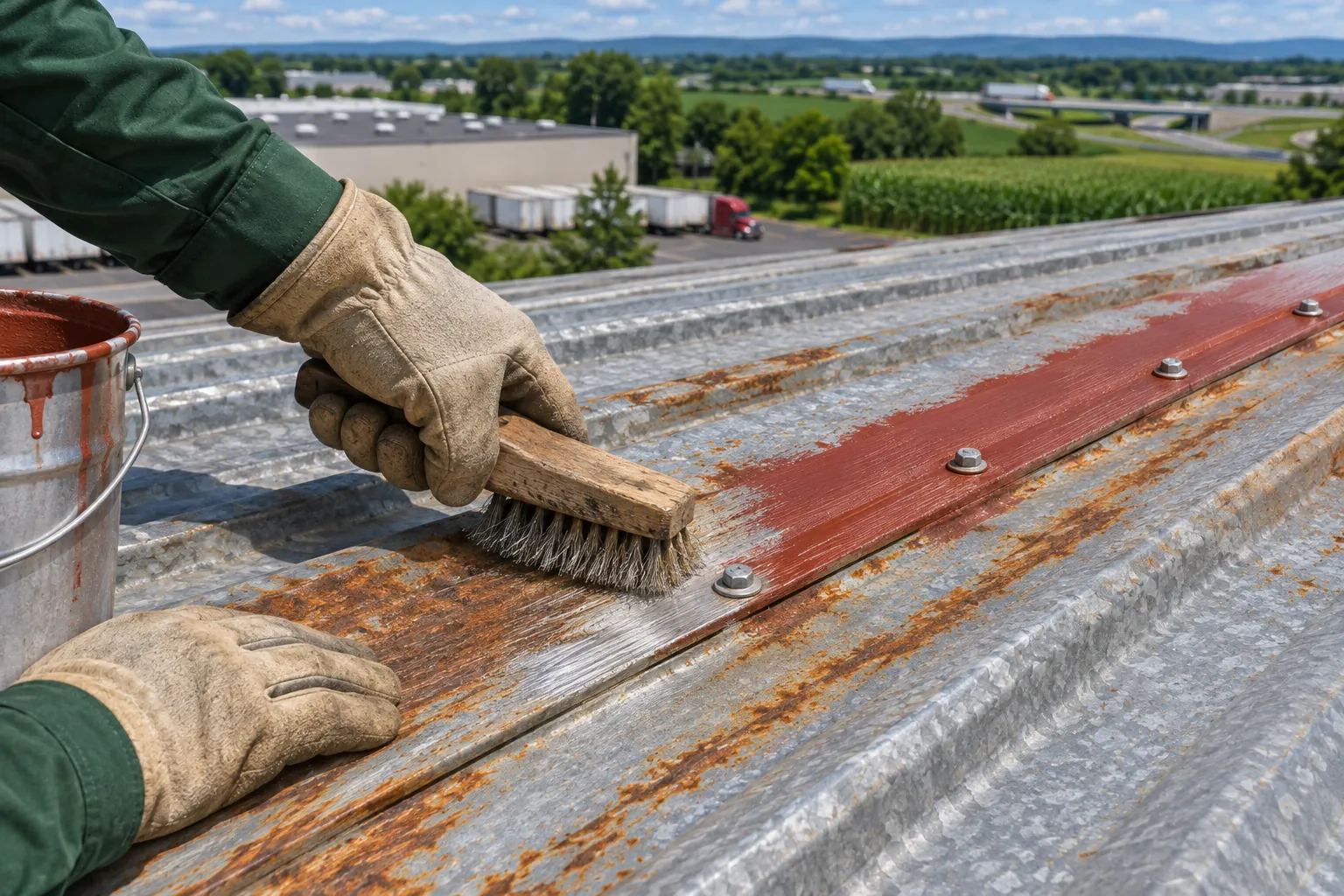
The prep and repair work behind every metal coat.
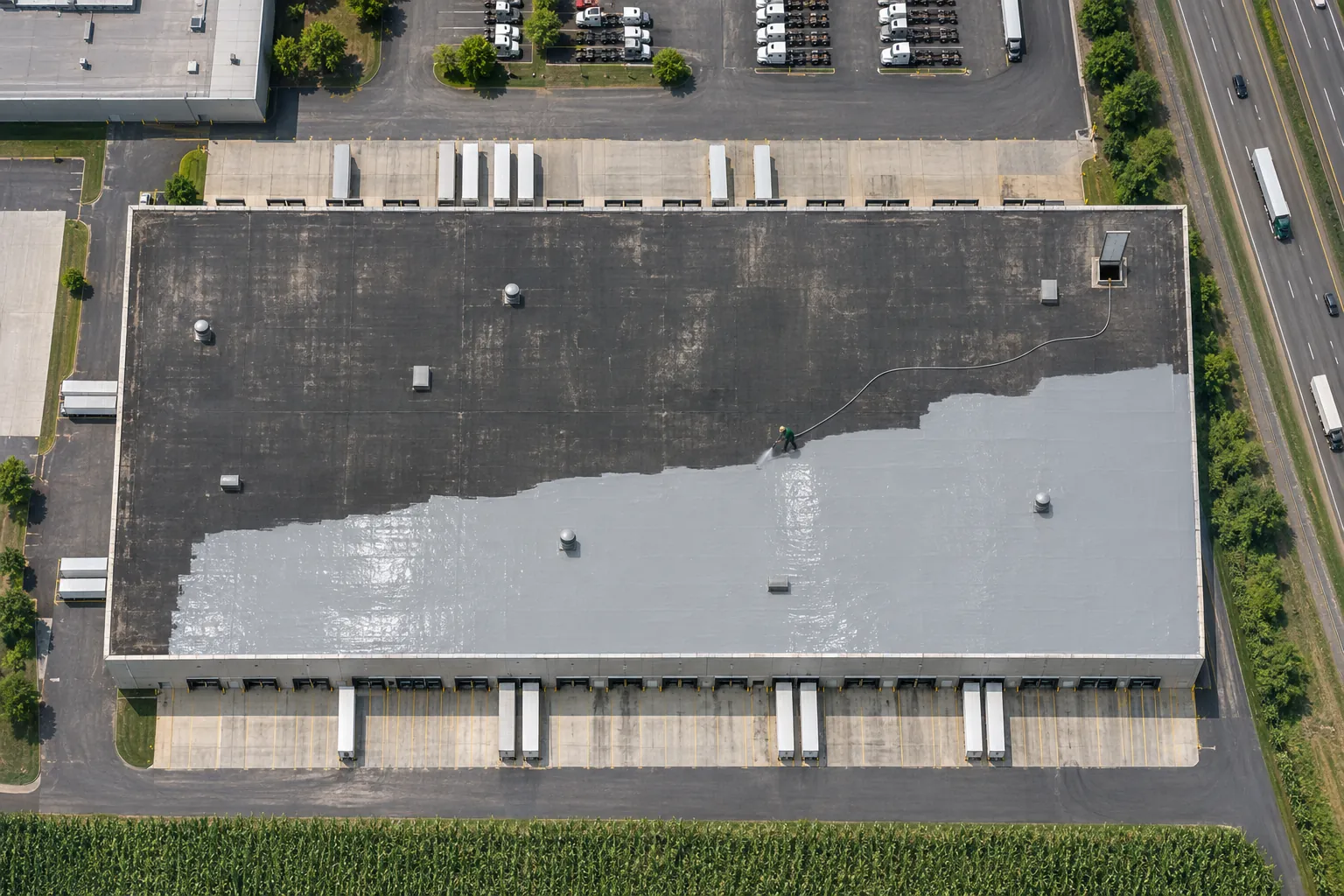
Heavier film for low spots and slow drainage.
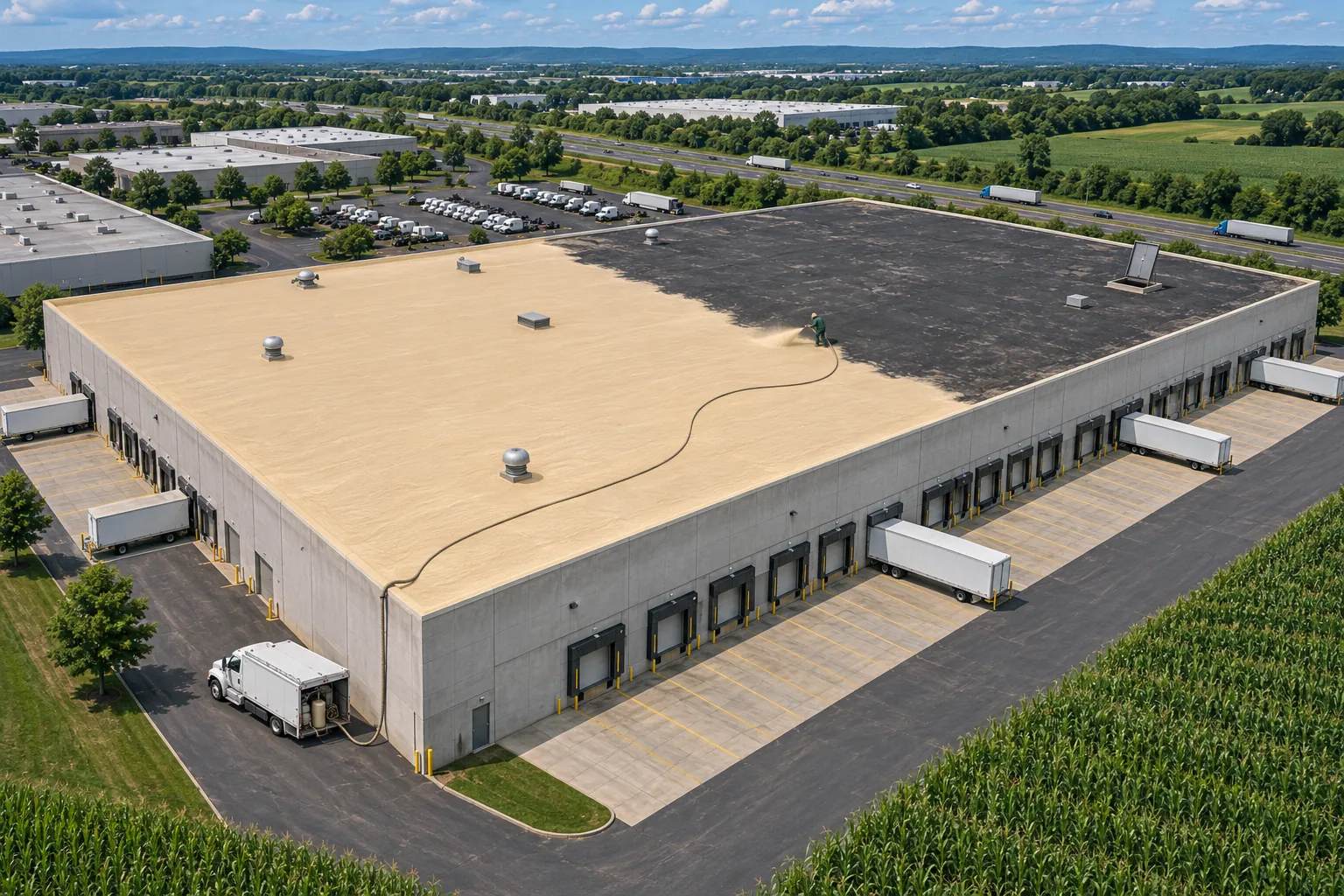
Added R-value with a coated foam surface.
Products made for asphalt, never metal coatings.
It protects a commercial metal roof when the panels are firm, prep suits the product, and drainage and drying conditions fit. Moving connections and traffic areas still need upkeep afterward, since that is where coverage wears first.
Well on pitched panels that shed water, after rust treatment and lap sealing. It struggles on flat areas that hold water, which is why those spots get a different detail.
Enough to reach the required film thickness everywhere, usually two passes or more. A coat count alone proves nothing; we check thickness over ribs, fasteners, and repairs, where the film runs thinnest.
Against the product sheet. We plan passes and drying time to reach the specified thickness at raised surfaces, not only on the flat panel between ribs.
The manufacturer sets it, and conditions change it. Surface temperature, humidity, film thickness, and dew all matter. A sunny section can feel dry while a shaded area with heavier coverage is still soft.
When the manufacturer drying instructions are met for that section. We check shaded and heavy areas, not just the first spot that looks dry.
Prep and repairs often take as long as the coating. Each pass then needs a dry day plus drying time, so the schedule follows the weather more than the square footage.
Coating plans run about $2.50 to $4.00 per square foot. Rust treatment, fastener caps, lap fabric, and the number of passes needed to reach thickness move it within that range.
A white acrylic surface reflects much of the sun that a dark steel roof would absorb. Owners with hot work floors under metal roofs often notice the difference in summer.
See a ballpark range for coating your metal roof, or call to talk about runoff, rust, and timing.