Traffic Lines
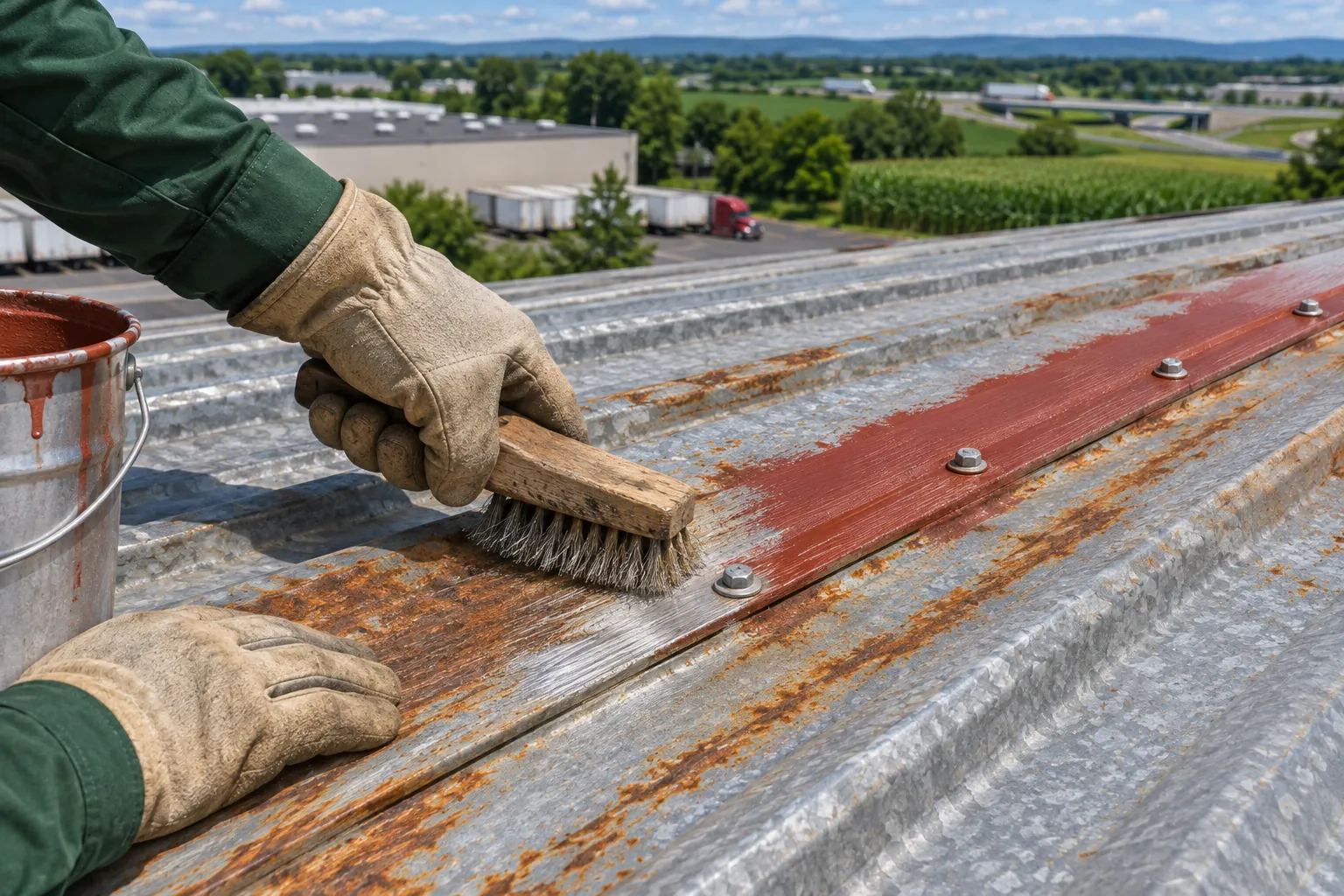
Bare streaks running from the hatch to units show foot traffic. A recoat there gets walk pads or heavier film. Pads stop the same streak from returning.
As a Souderton metal roof coating contractor, we trace thin and worn coating to its cause, check adhesion across the roof, and recoat what needs it.
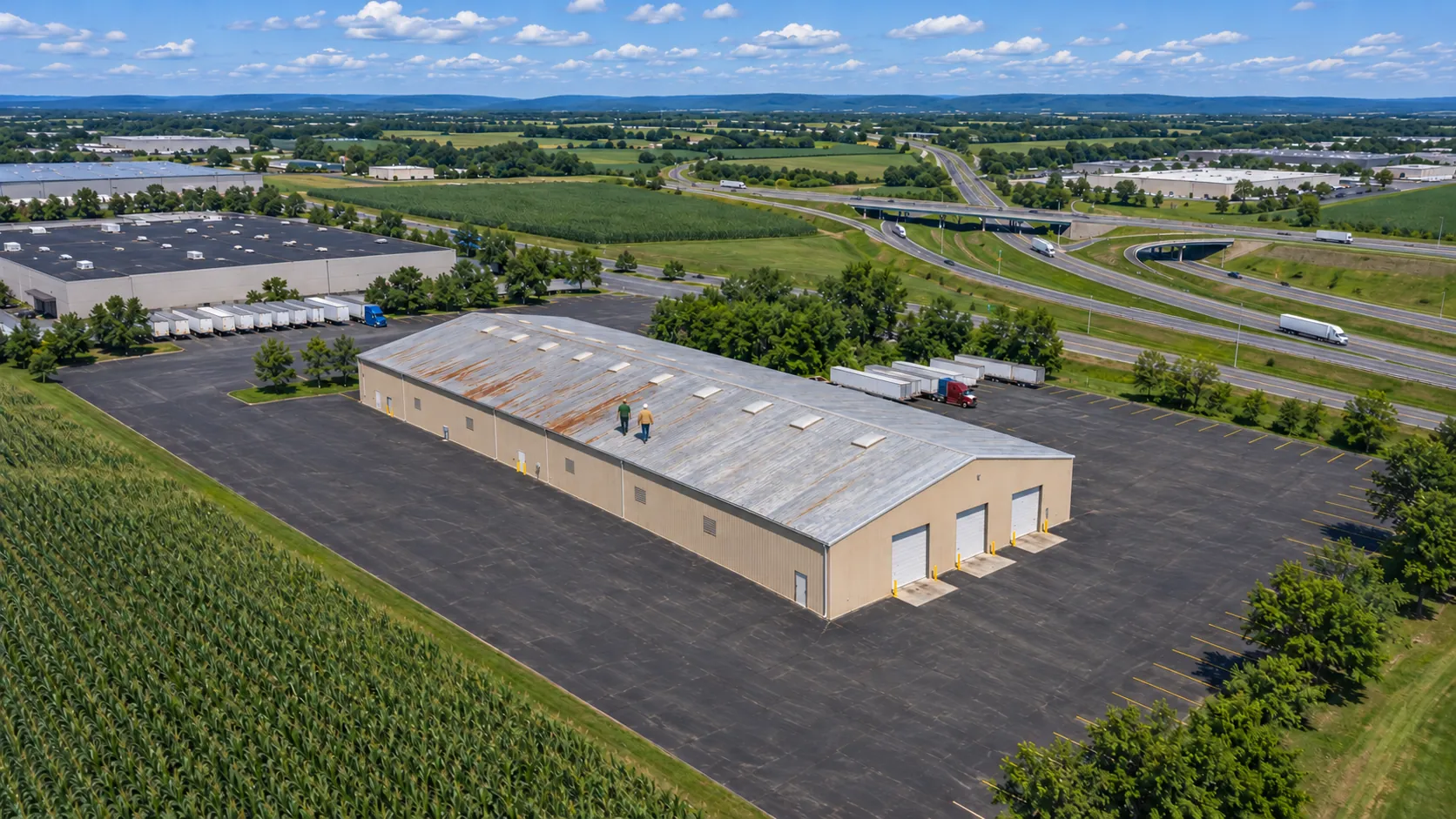
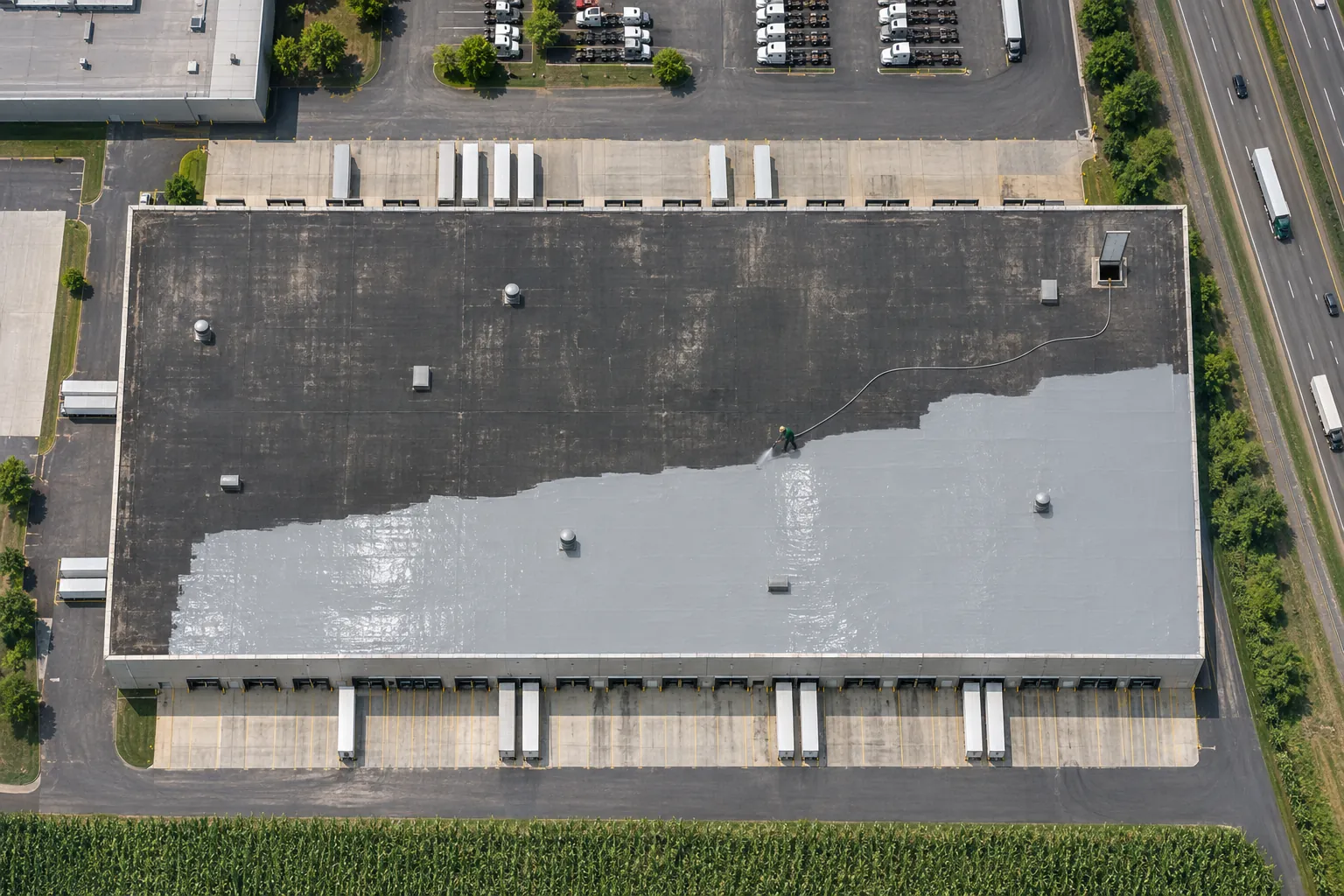
A coated roof wears unevenly, and most Souderton metal roof coating calls we get start with a thin patch someone noticed. The question is whether it is one spot or a sign of wider failure. We look at what the wear follows: foot traffic, raised ribs, or details that move.
Then we check adhesion away from the worn area to set the recoat limits.
When adhesion holds across the roof, the recoat stays local and the budget stays small. When film lifts in several places, the scope widens and the reasons are shown before any recoat is priced. Either way, the cause of the wear gets a fix so it does not return.
Thin coating shows up in predictable places. Each pattern points to a different fix.
Bare streaks running from the hatch to units show foot traffic. A recoat there gets walk pads or heavier film. Pads stop the same streak from returning.
Coating runs thin over raised ribs when first applied. Those high points chalk off first and need building back up. Extra film goes on the ribs during the recoat.
Laps that flex with heat cycles crack the film above them. Reinforcing fabric goes in before recoating. Fabric bridges the lap before the new coat.
Film that lifts in sheets off the panels has lost adhesion. That is a wider failure, and spot recoats will not hold. Peeling film is scraped back to coating that is well bonded or bare metal.
Orange spots under worn coating mean water has reached the steel. Those spots are cleaned and primed first. Primed spots are coated with the rest of the recoat area.
Records of earlier recoats show where wear returns. That history helps size the job. Notes from this visit start the next record.
A recoat sized to the real wear brings thin areas back without redoing film that is still holding.
Souderton recoats usually take one of these three scopes.
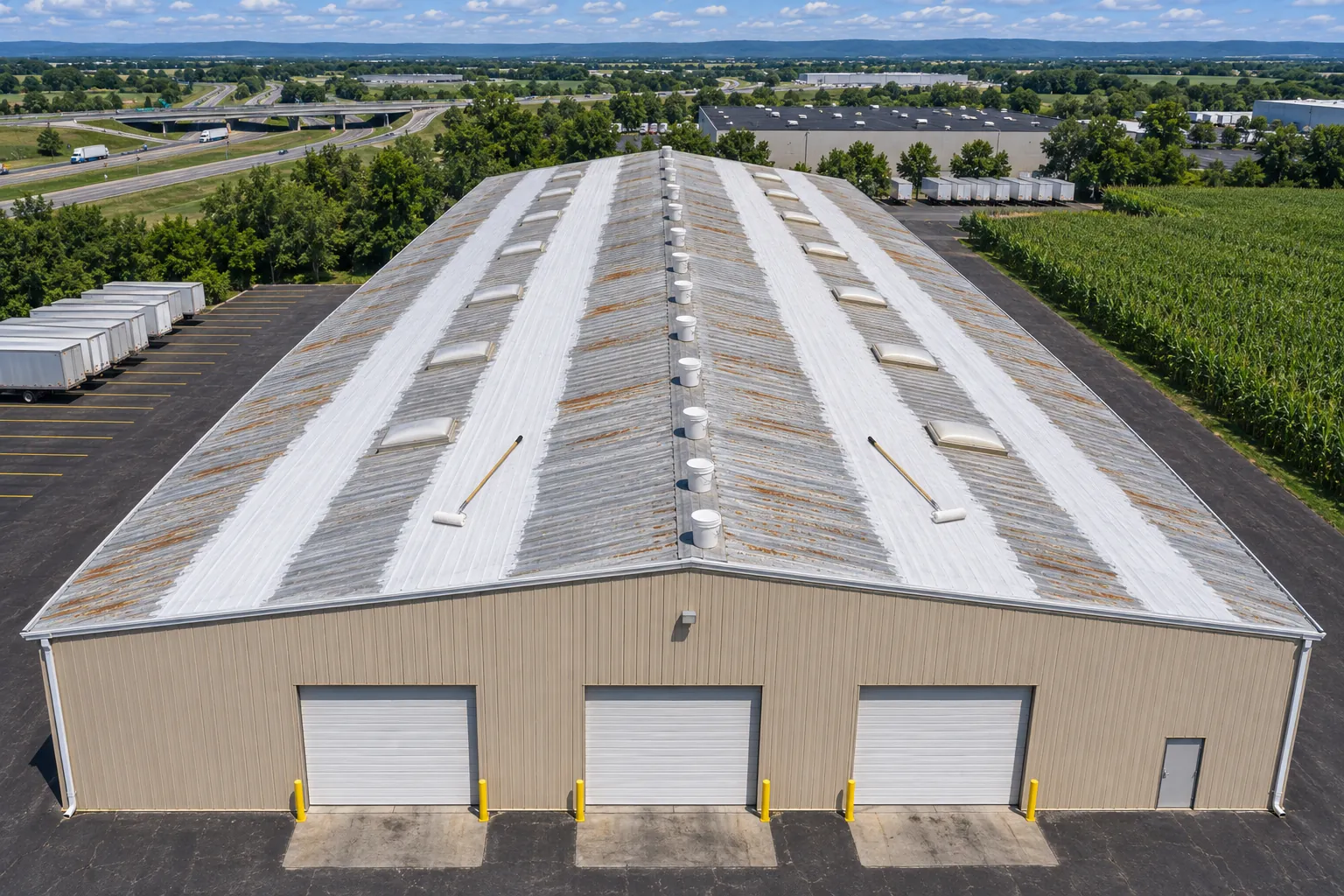
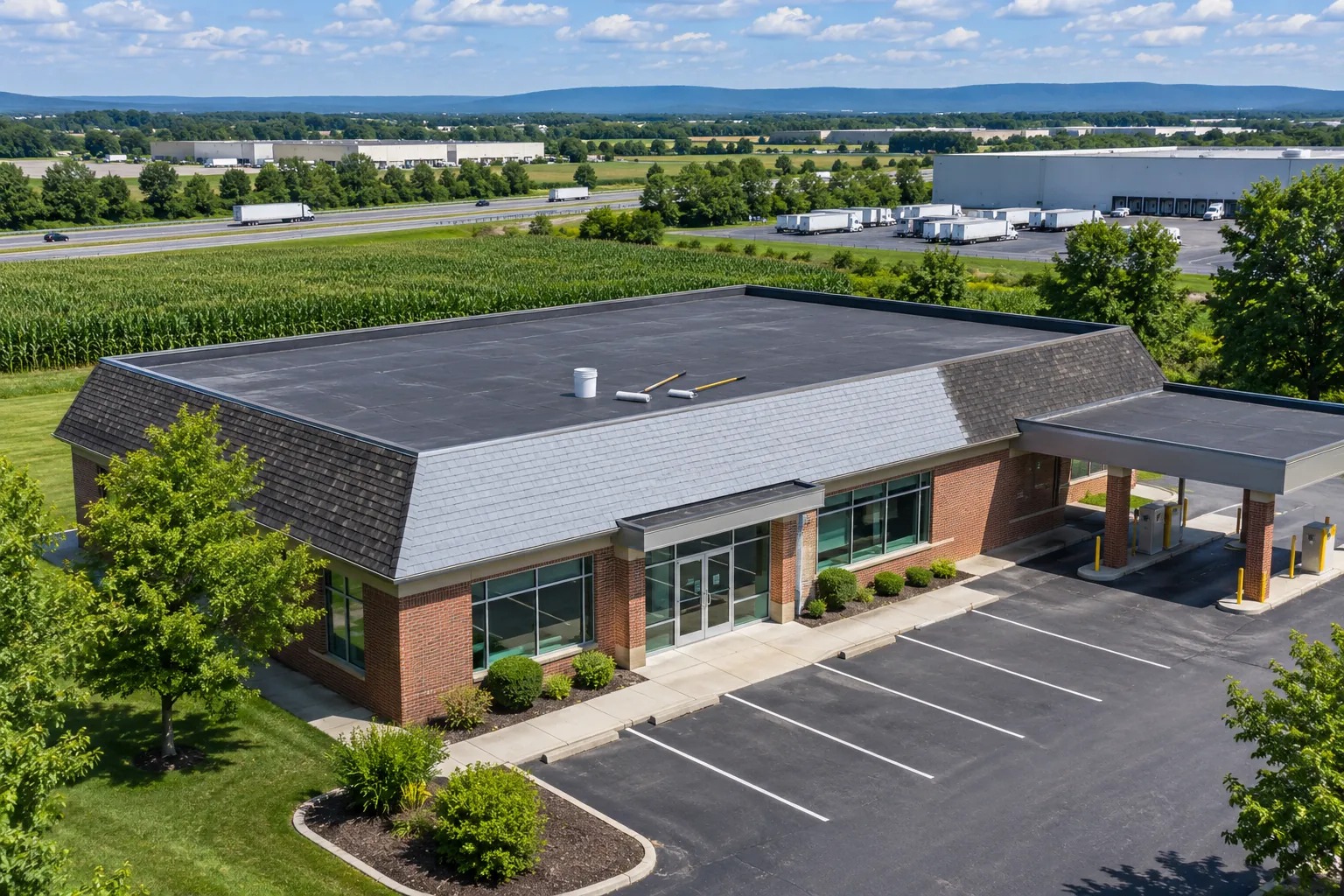
Wear is limited to paths or details, and adhesion elsewhere is good. Only those areas are cleaned and recoated. Edges of the recoat feather into film that is well bonded.
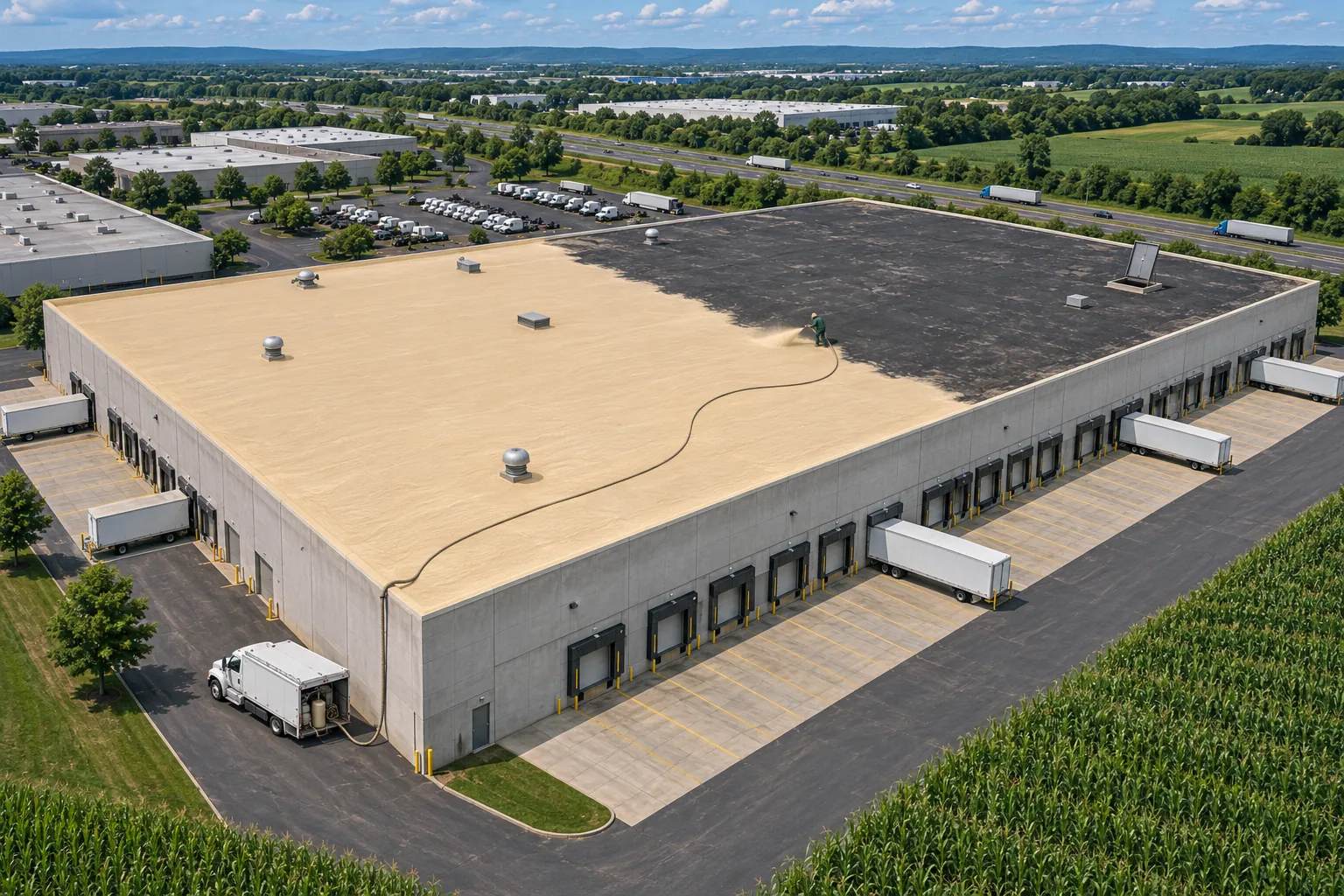
Film is thin across the roof but still bonded. The whole field is washed and recoated with a compatible product. Washing removes dirt so the recoat can bond.
Coating lifts in sheets. Failed film comes off before a new system goes on. Scraped edges are primed before new coating goes on.
Pads added along service routes to stop the same wear from returning. Pads sit on the coating along the busiest paths.
A yearly inspection that catches thin spots while they are still small. Small thin spots get fixed the same season.
Call us before rust takes hold. Thin spots caught early are the cheapest part of a coated roof to fix.
Every worn roof goes through these calls before a recoat is priced.
Worn areas, traffic paths, ribs, laps, and the coating away from the wear, with adhesion tests in several spots. Test spots are marked on the roof plan.
Traffic, ribs, and moving details each call for a different recoat detail. Each pattern gets its own detail on the recoat plan.
Good adhesion elsewhere means a local recoat. Weak adhesion across the field means a wider scope. The recoat edge is planned at a lap or rib line.
The recoat must bond to the existing film, so its chemistry decides the product. Mixing silicone and acrylic on one roof is avoided.
Thickness gets checked on the recoated areas and the owner receives notes on traffic paths to keep an eye on. Recoated areas get a thickness check on the roof before close-out.
Is your building outside Souderton? We coat roofs in these towns too; anywhere else, call us or send us a message.
Both, in order. Thin areas get assessed with the roof around them before recoat limits are set. We check whether wear follows traffic, ribs, or moving details and test adhesion elsewhere, so a wider failure is never treated as one spot.
When the old film is clean, compatible, and well bonded. Silicone takes silicone; acrylic takes acrylic. Peeling film comes off first.
It depends on scope. Local recoats cost less than full ones; the planning range for full coating is about $2.50 to $4.00 per square foot, moved by prep and film thickness.
If your building is in Souderton or nearby, call with the address and we will confirm coverage.
We handle recoats and coating maintenance on commercial metal roofs in and around Souderton.
Once a year and after major storms. Traffic paths, rib tops, and laps get the closest look, since wear shows there first.
Yes, when the coating is bonded. Pads compatible with the coating get installed along the routes technicians use most.
Film naturally runs thinner over raised ribs when applied. Sun and weather reach those high points first, so they chalk down sooner.
Ask us to size a recoat for your roof, or call to describe the worn areas you see.