Coating fits
Coating Candidate
- Shingle shape
- Flat and sealed down
- Granules
- Mostly intact
- Brittleness
- Flexible when lifted gently
- Below the shingles
- Dry deck and underlayment
- Leaks
- None, or traced to flashing
As an Allentown shingle roof coating contractor, we coat commercial shingles that are still flat, attached, and dry, using products approved for asphalt.
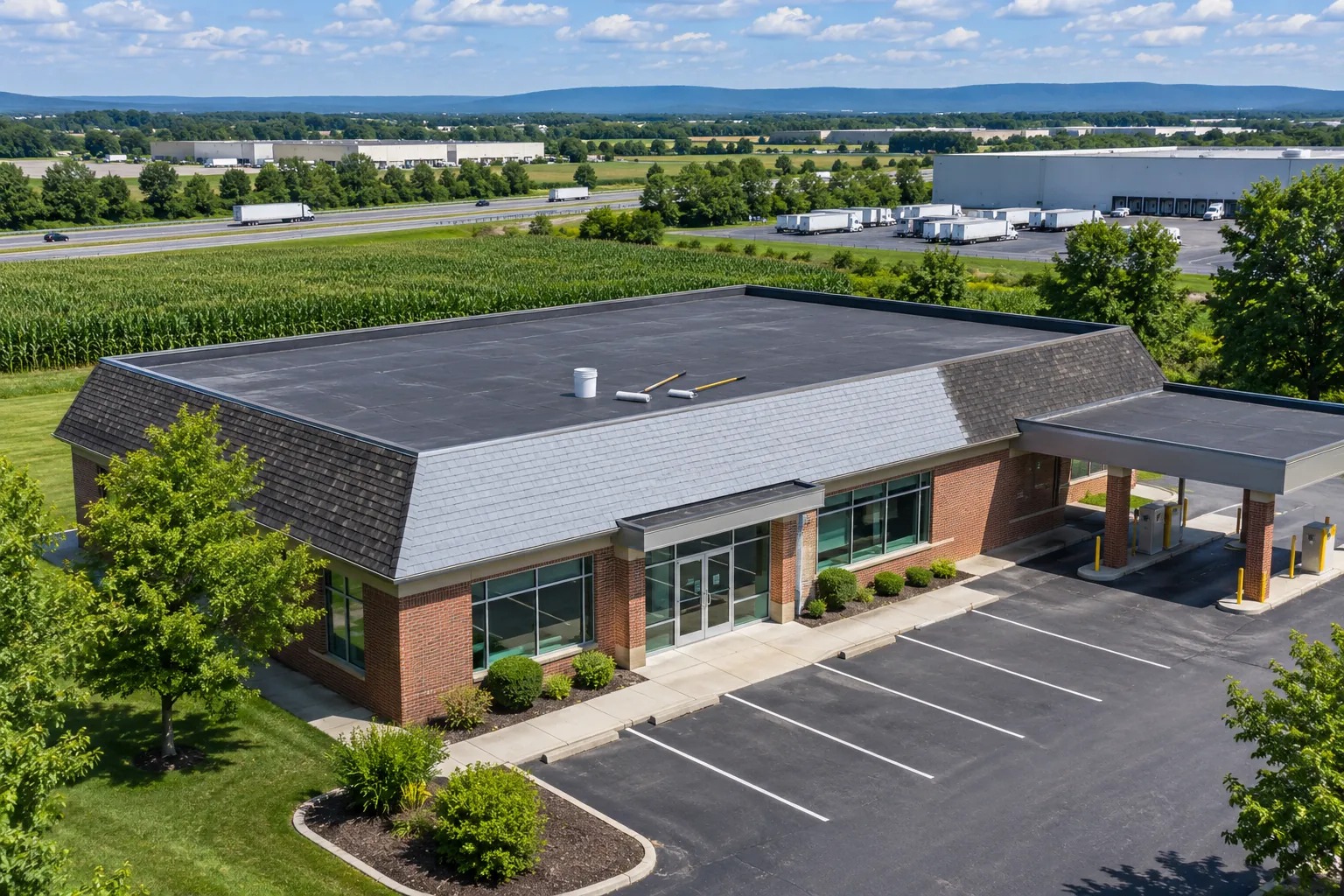
Allentown shingle roof coating fits a narrow set of roofs. This comparison shows a coating candidate beside a roof that needs reshingling.
A shingle coating only extends roofs that are already in fair shape. These conditions decide it.
Shingles that curl at the edges or cup in the middle have lost flexibility. A coating will not flatten them, so they point to replacement. Replacement gets priced plainly beside the coating option.
Bare mat showing through means UV has been reaching the asphalt. Light loss can be coated; heavy loss means the shingle is near its end. Granule loss is noted section by section on the roof.
Leaks at walls, chimneys, and valleys usually come from flashing. That metal gets repaired, since shingle coating will not seal it. Step and counter flashing get repaired at walls.
Poor ventilation cooks shingles from below and wets the deck. We check vents and the underside before talking about coating. Vents may need adding before any roof work.
Patches of different shingles and tar show where leaks have been. Each is checked for what it was hiding. Matching shingles replace mismatched patches where possible.
Shingle makers and coating makers both publish guidance. Written compatibility for both is required before we recommend a product. No coating is applied until both makers approve it.
Shingle work splits into a few clear paths once the inspection is done. These are the options we lay out.
A product made and approved for asphalt shingles, applied over a clean, dry, intact roof. Approval in writing comes before any product is ordered.
Leaks traced to walls, valleys, or penetrations are fixed at the flashing, with no coating needed. Flashing at valleys gets the same check as walls.
Damaged or missing shingles replaced to match before any coating is considered. Spot repairs blend before coating is weighed.
Steep shingle faces on commercial blocks coated where condition allows, with the flat roof behind handled separately. The flat roof behind the face gets its own plan.
When the shingles have lost serviceability, replacement is the honest recommendation, priced plainly. Tear-off and new underlayment are priced together.
Coating gives intact shingles a fresh weathering surface. It is a maintenance step for a roof that still works.
Call us. Leaks at walls and chimneys almost always start at the flashing, and that repair comes before any talk of coating.
These four decisions come before any shingle roof gets a coating.
Shingle condition, granules, flexibility, flashing, ventilation, and the deck from below. Photos and notes go into the findings.
Curling, brittle, or bare shingles go to replacement. Flat, flexible, intact shingles can be coated.
Flashing, damaged shingles, and ventilation problems are repaired before coating, so the coating is not covering active leaks.
We check written guidance from the shingle maker and the coating maker and choose only a product approved for both.
Shingles are cleaned and dried, repairs are made, and the approved product goes on at the rate its maker specifies, kept clear of vents and drainage paths.
Buildings with shingle faces often have metal or flat sections too. These services cover them.
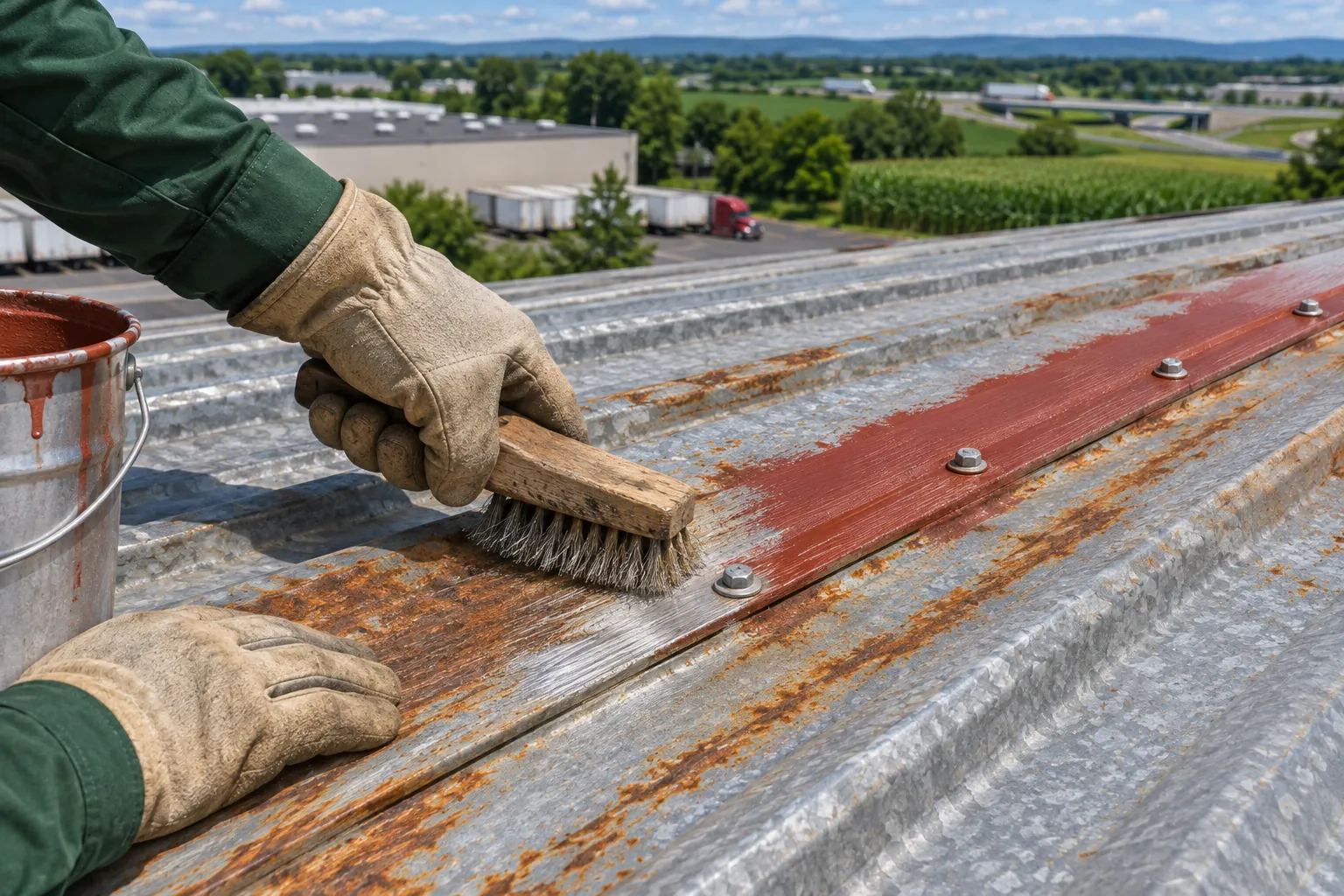
Steel roof sections on the same property.
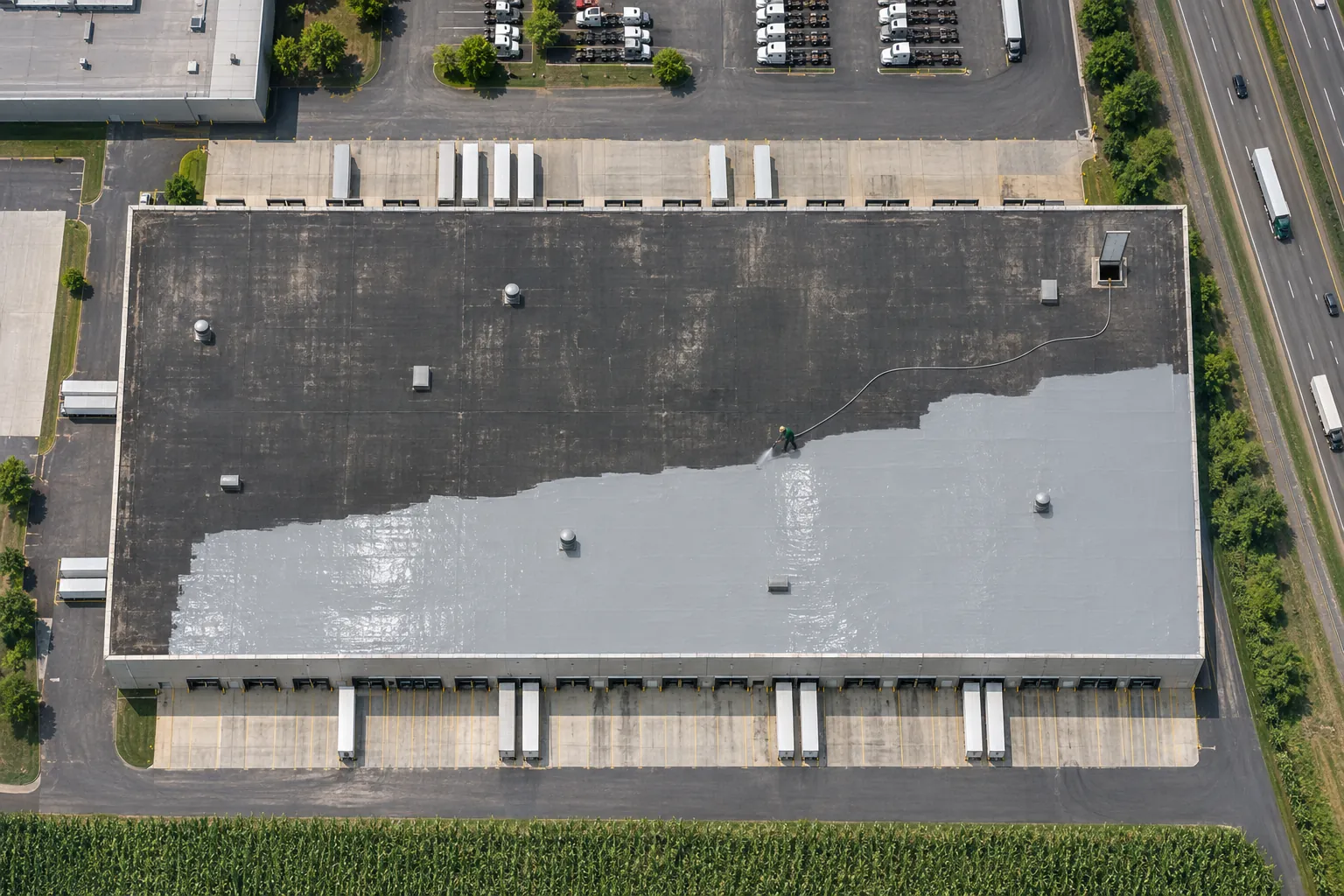
Flat sections behind a shingle mansard.
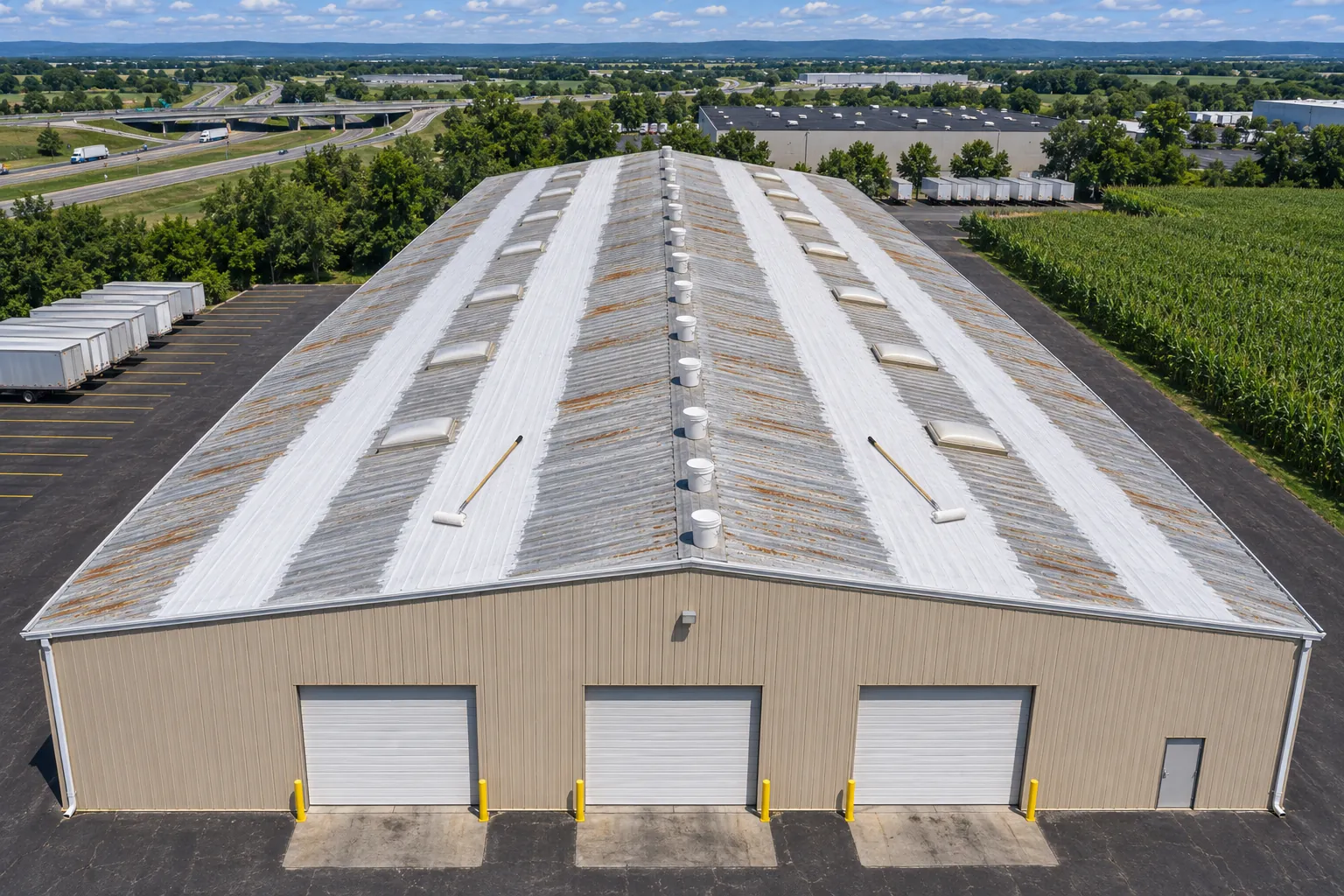
Bright finish on well-drained metal pitches.
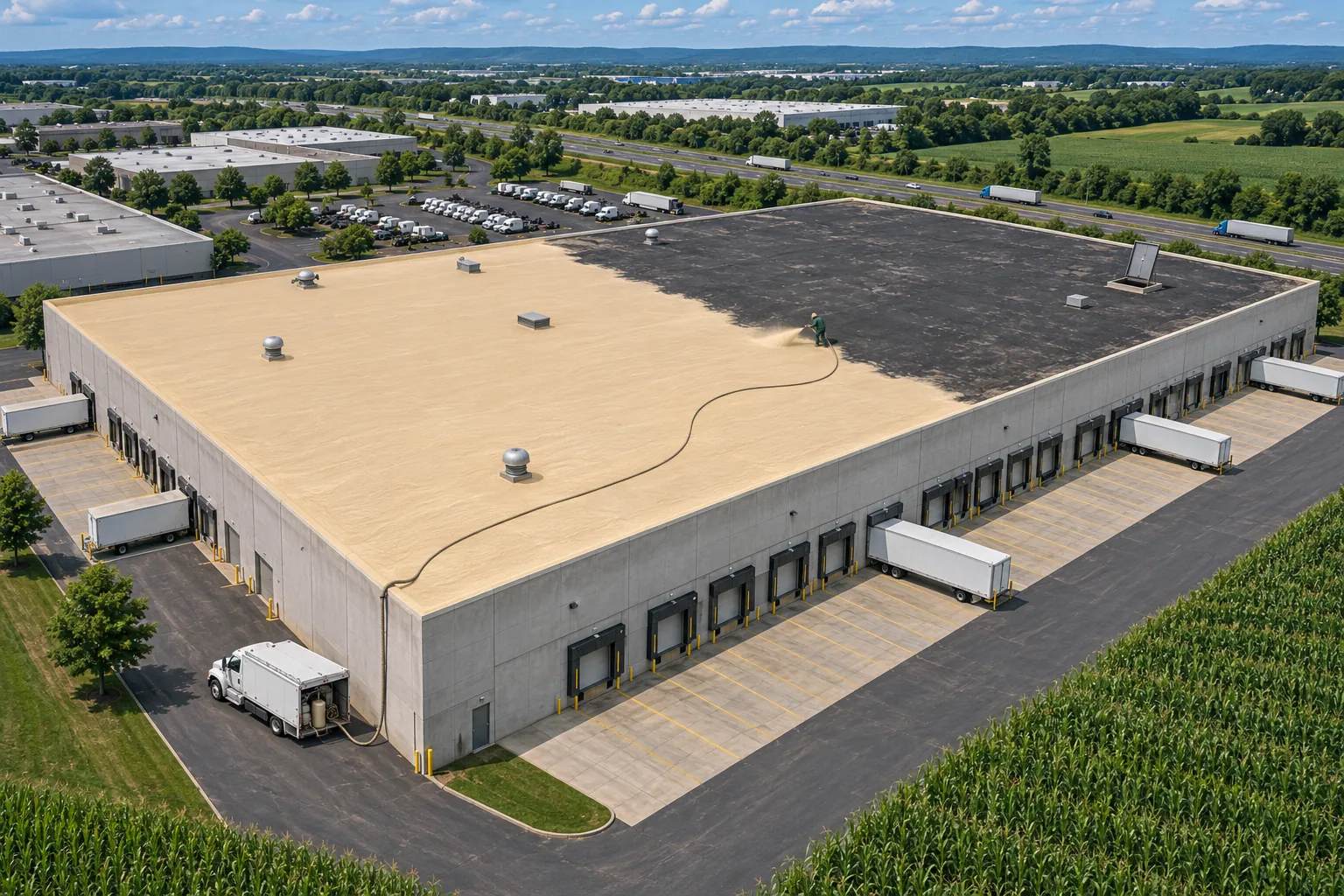
Recovering a flat roof with insulation.
On the right roof, it adds a fresh protective surface. That roof has flat, flexible, attached shingles with most granules in place, dry decking, and sound flashing. On worn shingles, coating does not restore what has been lost.
With written compatibility guidance for both the shingles and the coating, plus a check of roof condition and ventilation. A product made for metal or membrane is never assumed safe for asphalt shingles.
By shingle condition. Curling, brittle shingles with missing material and moisture below need replacement. Coating is a maintenance step for shingles that still work, and cannot stand in for replacing ones that have lost serviceability.
No. Curling means the shingles have lost flexibility, and a coating will not flatten them. They need a replacement assessment.
One approved in writing for asphalt shingles by its maker and acceptable under the shingle maker guidance. We choose from products that meet both, then match application to the roof condition.
No. Leaks at flashing are traced and repaired at the flashing. Coating the shingles around it leaves the opening in place.
Yes. Mansard shingle faces and the flat roof behind them are separate systems. Each gets its own inspection and product, with the flashing where they meet repaired first.
Coating costs less up front, but only makes sense on shingles with service left in them. On worn shingles, money spent on coating delays a replacement that still has to happen.
Poor attic or deck ventilation overheats shingles from below and can trap moisture. We check it first, because coating does nothing for a roof cooked from underneath.
Some granule loss is normal with age. Heavy loss, or bare mat showing across the roof, means UV is reaching the asphalt and the shingles are nearing the end of their service, which usually rules coating out.
Ask for an honest read on your shingle roof, or call to talk through coating, repairs, and replacement.