Tar Over Screw Rows
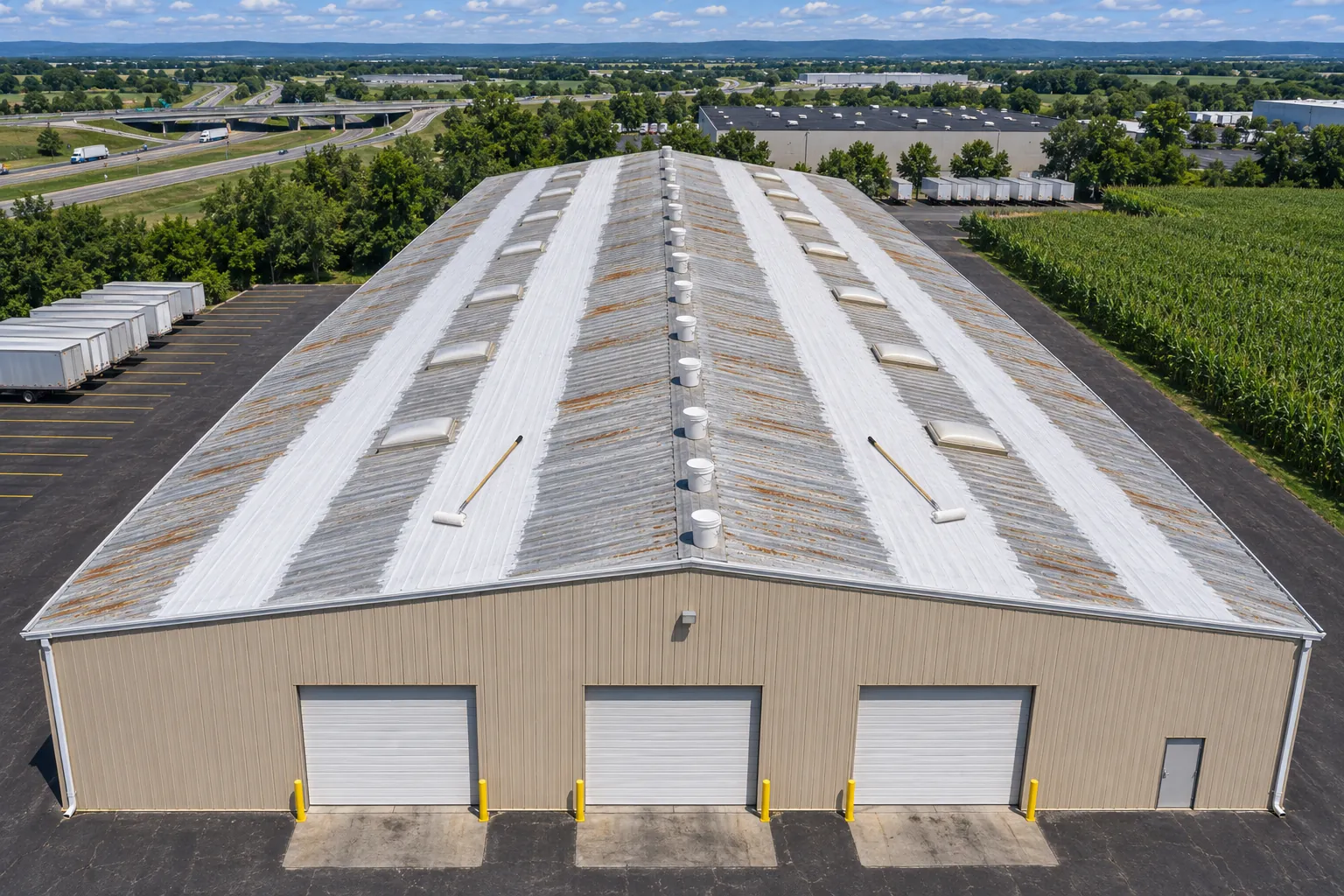
Black mastic smeared over fastener lines often cracks and holds water against the screws. It gets scraped back so each fastener can be checked. Firm mastic can stay under a blocking primer.
As an Emmaus metal roof coating contractor, we test the old patches on your warehouse roof, keep the ones that hold, and coat over a firm surface.
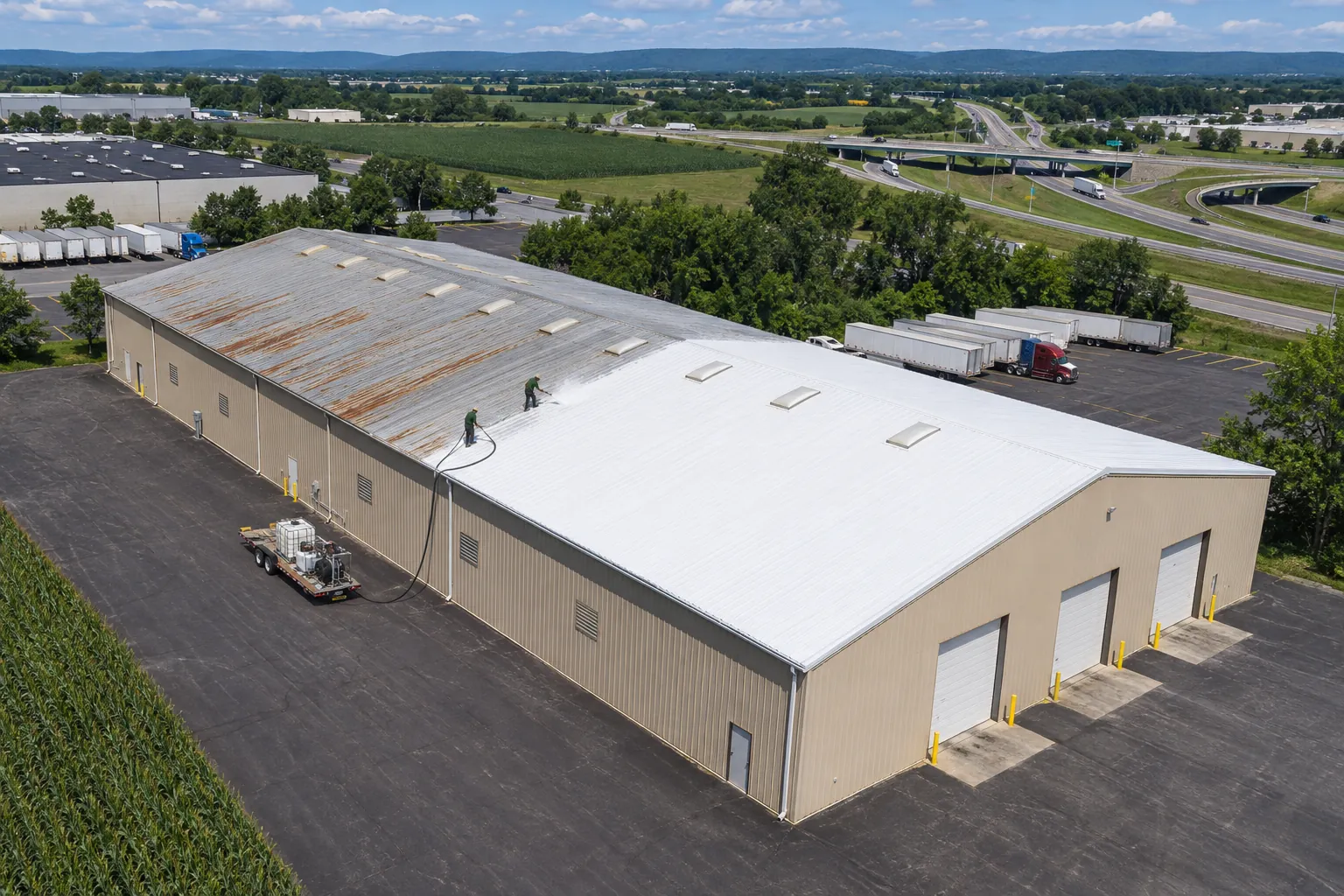
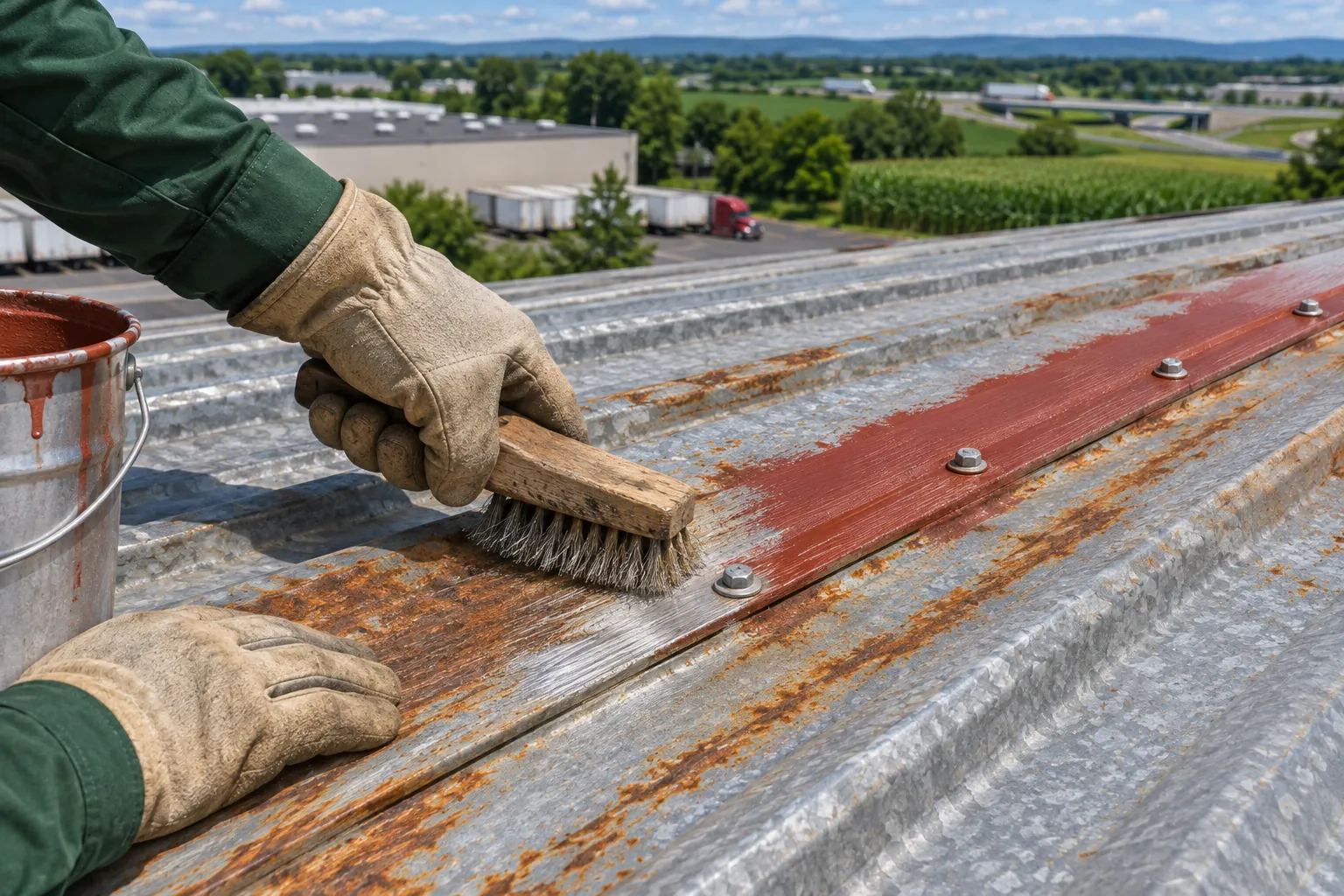
Most Emmaus metal roof coating jobs on older warehouses start with a roof full of earlier fixes: tar over screw rows, tape across laps, sheet patches riveted over holes. Some of those repairs can stay under the new coating. Others hide moisture or have lost their grip, and those come off.
Adhesion tests and a close look at each patch edge decide which is which.
Patches that pass stay as part of the new system and get primed where the product calls for it. Patches that fail come off, and the steel under them is cleaned, primed, re-fastened, or replaced before the coating crosses that spot. Owners see the list of each before work starts.
Old warehouse roofs in Emmaus tell their leak history through their patches. These are the conditions we sort out first.
Black mastic smeared over fastener lines often cracks and holds water against the screws. It gets scraped back so each fastener can be checked. Firm mastic can stay under a blocking primer.
Aluminum or butyl tape across side laps lifts at its edges with age. Tape that peels by hand comes off, and the lap is sealed fresh. Taped laps that stick tight are cleaned and primed.
Sheet-metal patches riveted over holes can trap water and rust the panel under them. We look beneath loose edges before deciding. Plates hiding holes come off so the panel can be judged.
Earlier coatings that chalk or peel cannot carry new film. A pull test on a small area shows whether they stay or get stripped. A coin-sized test patch shows the answer within a day.
Wet insulation often sits right below the worst patches. Probing and checks from inside find it before anything is sealed over. Wet sections are cut out and replaced with dry material.
Owners who kept notes on past leaks save time. Those records point us to the panels and seams that failed most often. Photos from past repairs help as well.
On a roof full of patches, the coating job turns a mix of repair materials into one surface that can be maintained.
Emmaus warehouse roofs usually land in one of these three approaches once the patches are sorted.
Repairs that pass adhesion checks stay in place, get primed where needed, and disappear under a continuous coating. Primer goes over kept patches where the product calls for it.
Patches and coatings that fail come off first, so new material bonds to clean, primed steel. Bare steel is primed soon after it is cleaned.
Panels covered in layered patches over rust-through get swapped before the field is coated. New panels match the rib profile already on the roof.
Where leaks trace to a few taped laps, those laps are rebuilt and reinforced before the field is coated. Fabric bridges each rebuilt lap under the coating.
A full patch-by-patch survey, priced on its own, for owners planning a coating budget a year ahead. The survey becomes the repair list for the coating job.
Call us and point to the repair that keeps failing. We start there and check what is under it before planning the rest.
Four calls, in order, take a patched roof to a coated one.
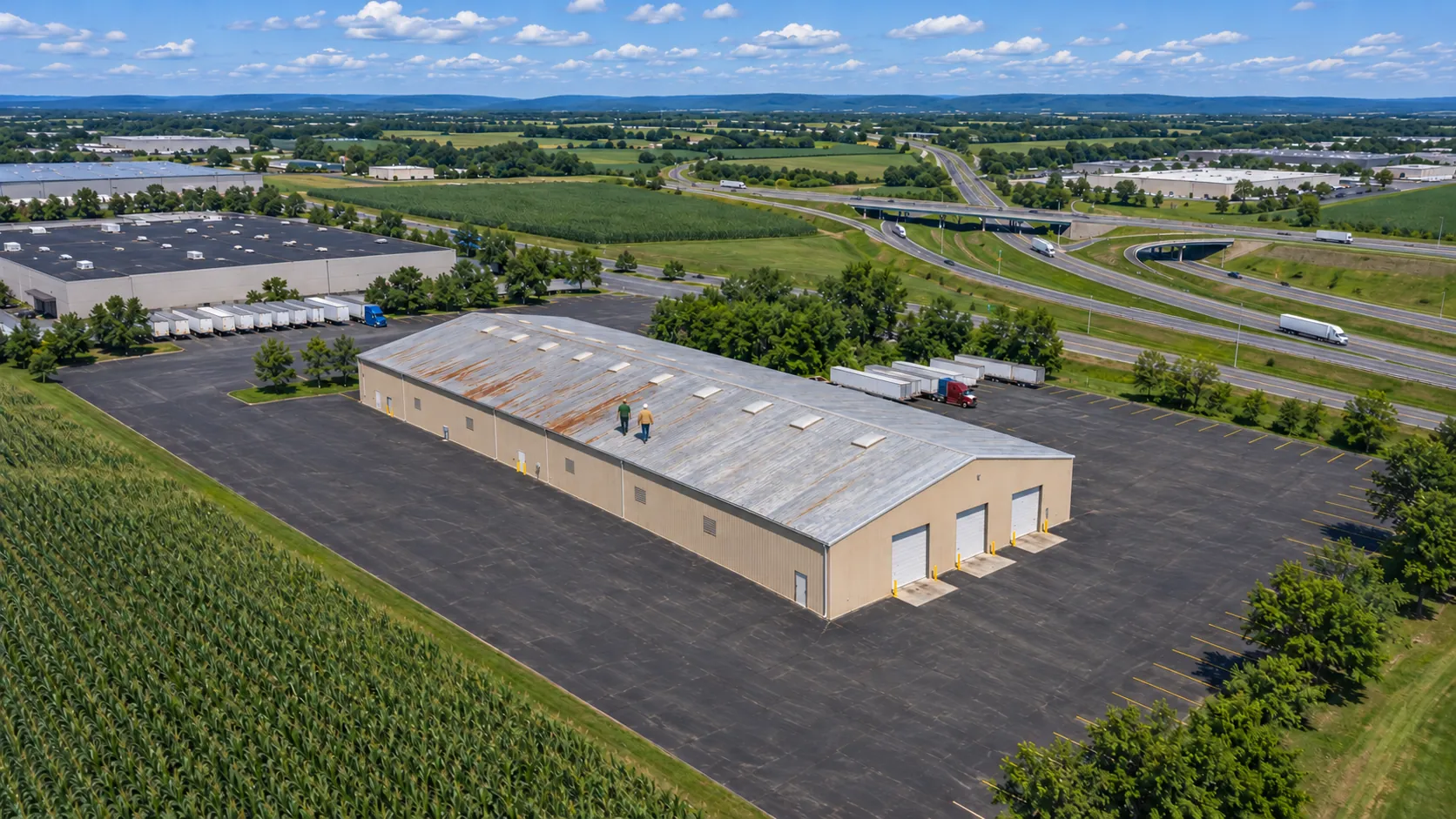
Every patch, lap, and fastener row gets looked at, with notes on what each repair covers and whether water is getting past it.
Pull tests and edge checks sort the patches. Firm, dry repairs stay; lifting or wet ones come off.
Areas under removed patches are cleaned, primed, re-fastened, or replaced, depending on the steel.
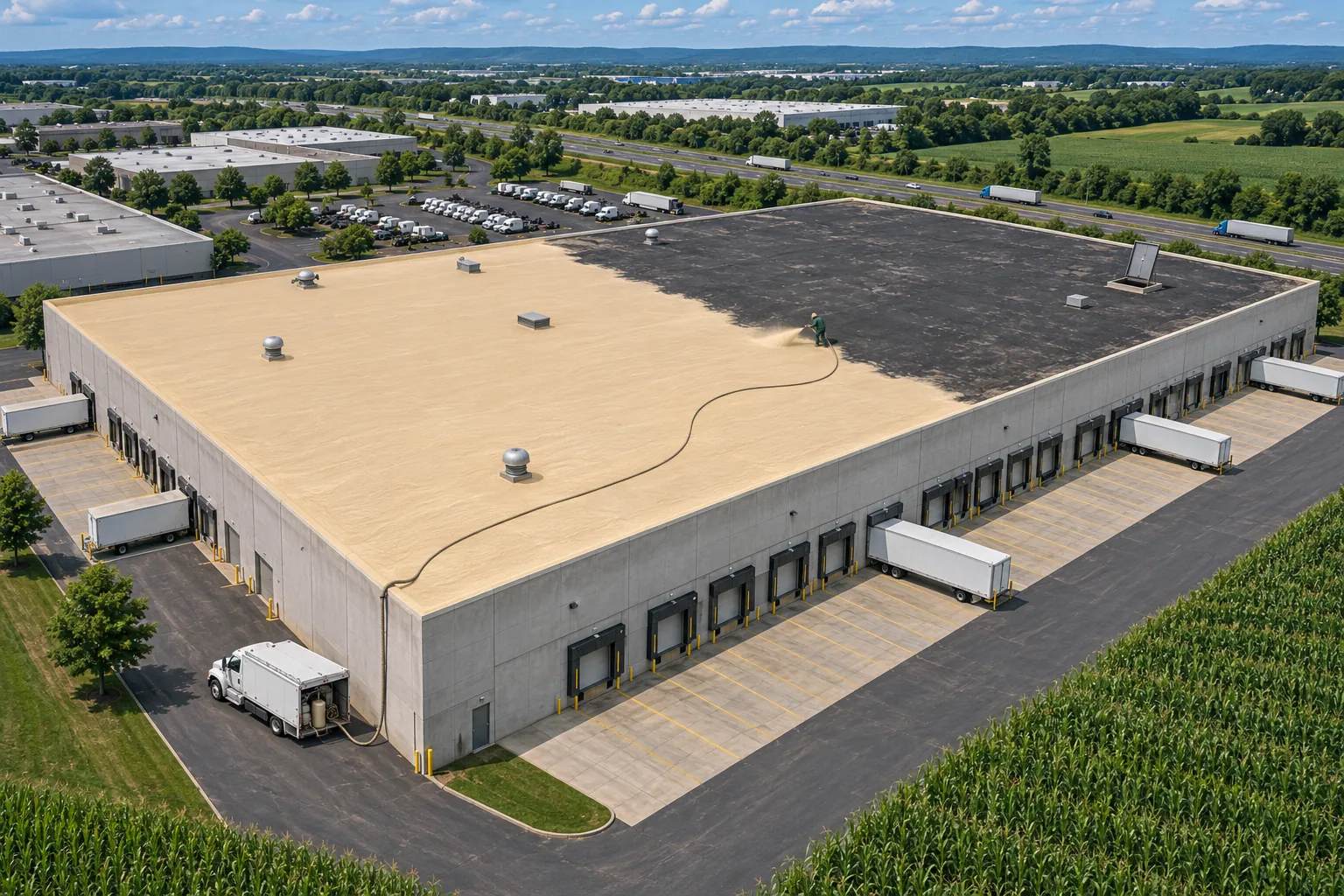
A system compatible with the remaining repairs and the bare primed steel goes over the whole field.
The owner gets a record of which roof repairs stayed, which came off, and what went down in their place, so the next inspection starts from facts.
Is your building close to Emmaus? We also coat roofs in the towns below; elsewhere, call us or send us a message.
Some of them. Repairs stay only where their adhesion and compatibility suit the new system. We check edges, grip, and moisture under each questionable patch, and remove the ones that fail so the coating sits on firm material.
Usually, yes. Asphalt mastic can bleed through many coatings and often cracks over fasteners. Tar that is firm can be primed with a blocking primer; cracked or soft tar comes off.
The patch work drives it. Planning ranges run about $2.50 to $4.00 per square foot for coating, and the number rises with how many repairs come off, how much rust is under them, and how many fasteners need replacing.
Yes. Shops, storage buildings, and light industrial roofs in Emmaus get the same inspection and the same patch-by-patch review before coating.
Likely, yes. Call with the address and we will confirm whether the building fits our service area.
Testing takes part of the inspection visit. Removal and rebuilding add days that depend on how many patches fail, and that count comes from the tests rather than a guess.
Yes. Work moves section by section, with protection under any area where patches are cut out and the roof is briefly open.
Ask us to sort the patches on your roof, or call to describe the repairs that keep leaking.