
This service
Spray Foam Roof
- What goes on
- Foam layer, then a topcoat
- Insulation
- Adds insulating value
- Roof weight
- Light for the insulation gained
- Planning needs
- Wind, overspray, intakes
- Upkeep
- Recoat the topcoat over time
As an Allentown spray foam roofing contractor, we spray foam over firm, dry roofs, then coat it, adding insulation and one continuous surface.
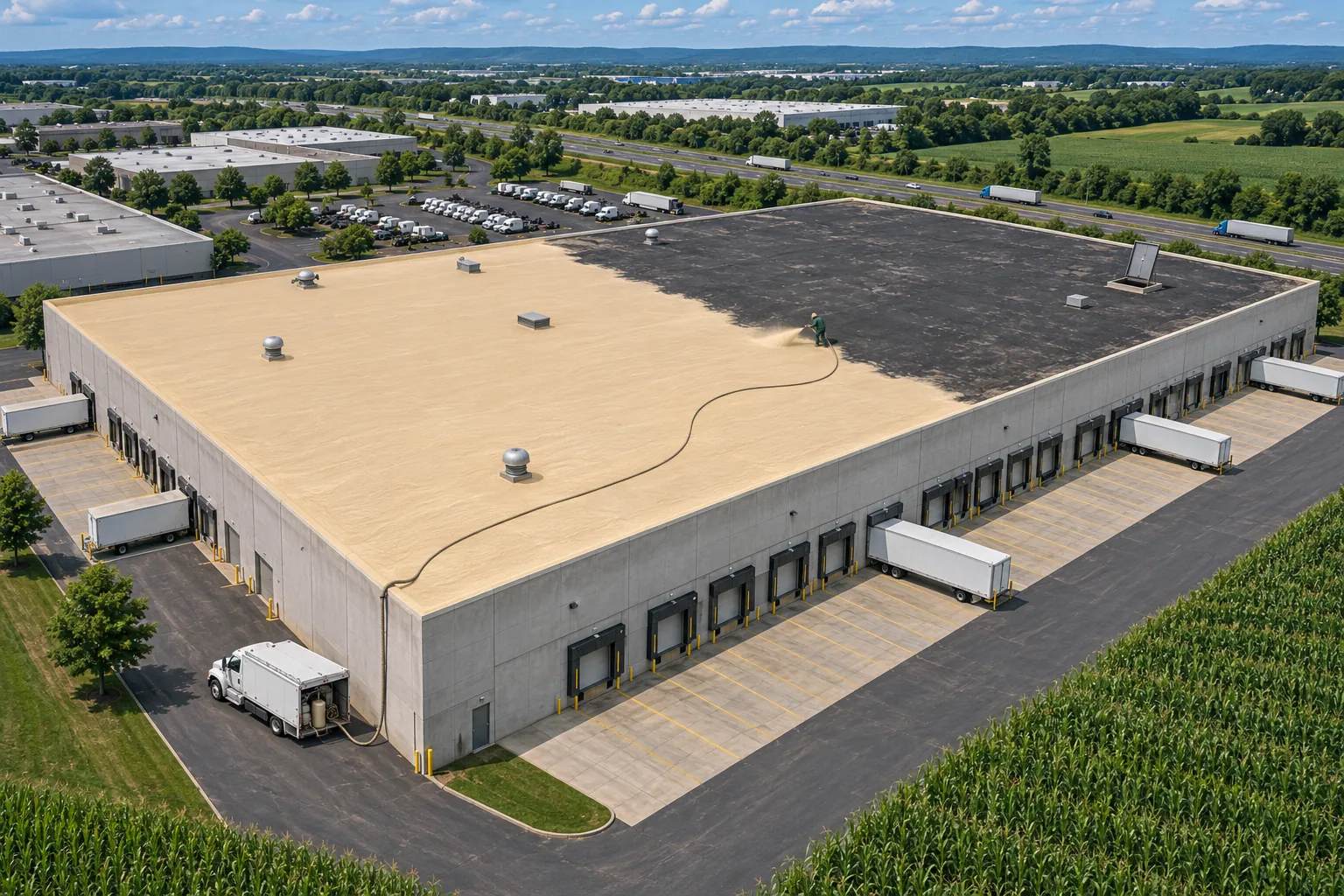
Allentown spray foam roofing works over firm, dry substrates on buildings that can plan around overspray. Compare it with coating alone.
Foam bonds to what is under it, so these conditions get settled before any spraying.
Loose metal under foam makes a loose foam roof. We confirm panels and supports are fastened and firm before an overlay is considered. Fasteners get added or upsized where the panels move.
Wet insulation or a damp deck ruins foam adhesion. Moisture checks and cut tests come first, and wet material is removed. Cut tests confirm the deck is dry before spraying.
Overspray and fumes can reach rooftop intakes. Units get covered or shut down on a plan agreed with the facility. Units restart only after the foam surface cures.
Wind carries overspray to cars and neighbors. Spray work waits for calm days, with screens around the work area. Screens go up at the roof edge on spray days.
Peeling or chalky coatings under foam fail as one layer. They get stripped or tested to firm material first. Pull tests show which old coatings can stay under foam.
Only the topcoat protects the foam. Punctures from tools and foot traffic get sealed promptly so UV and water stay out. Annual checks catch topcoat damage while it is small.
Foam roofs are built from a few choices. These are the ones decided for each building.
Foam sprayed over firm, fastened steel fills the ribs, covers the fasteners, and creates a new continuous surface. Fasteners under the foam get checked first.
Older built-up or single-ply roofs that are dry and attached can take foam as a recover layer. Wet layers are removed before any foam goes down.
Thickness is set by insulation goals and drainage, building slope toward drains where the roof needs it. Thicker foam can also improve drainage slope.
A silicone topcoat over cured foam, common where low spots remain. Granules can go into it for walk paths.
An acrylic topcoat over foam where water runs off and dry weather allows. Acrylic needs drier weather to cure on foam.
Foam changes the roof more than coating does, adding insulation and covering seams and fasteners in one layer.
Call us before water gets into the foam. Damaged topcoat and wet foam are repaired differently, and we can tell which you have.
Foam takes more planning than coating. These calls come in order.
Panel attachment, deck condition, moisture, old coatings, and every penetration get checked. We also note intakes, doors, and parking near the roof edge.
Insulation goals, roof weight, and how many seams the roof has decide whether foam earns its extra planning.
Rooftop intakes, vehicles, and neighbors get a plan: covers, shutdowns, screens, and wind limits for spray days.
Silicone or acrylic, chosen by drainage and recoat plans, applied once the foam has cured.
Topcoat thickness, punctures, and wear on walk paths are checked during routine visits. Damage gets sealed promptly, and the topcoat is renewed before foam is exposed.
Foam is one option among several. These services often come up in the same conversation.
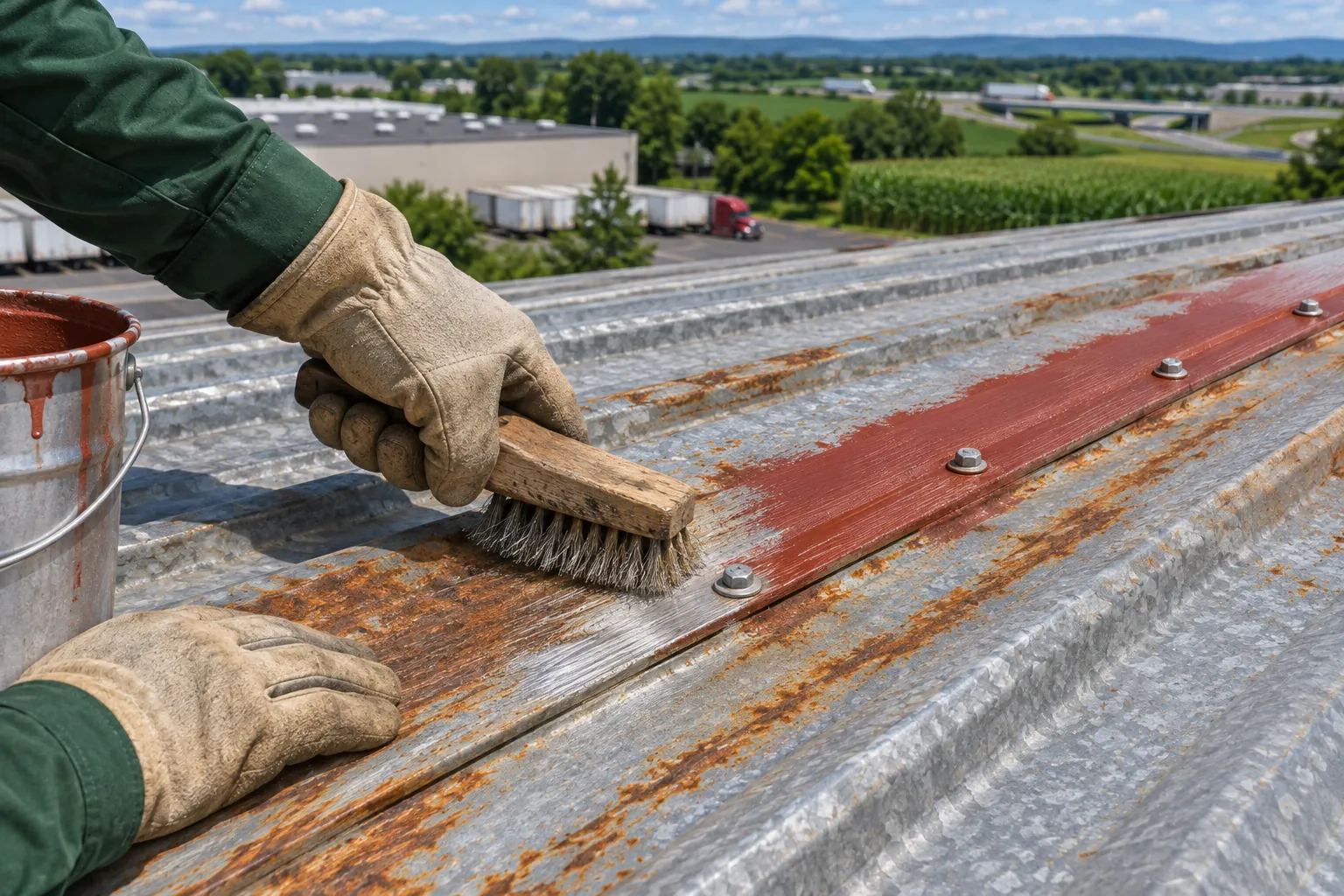
Coating steel panels without adding foam.
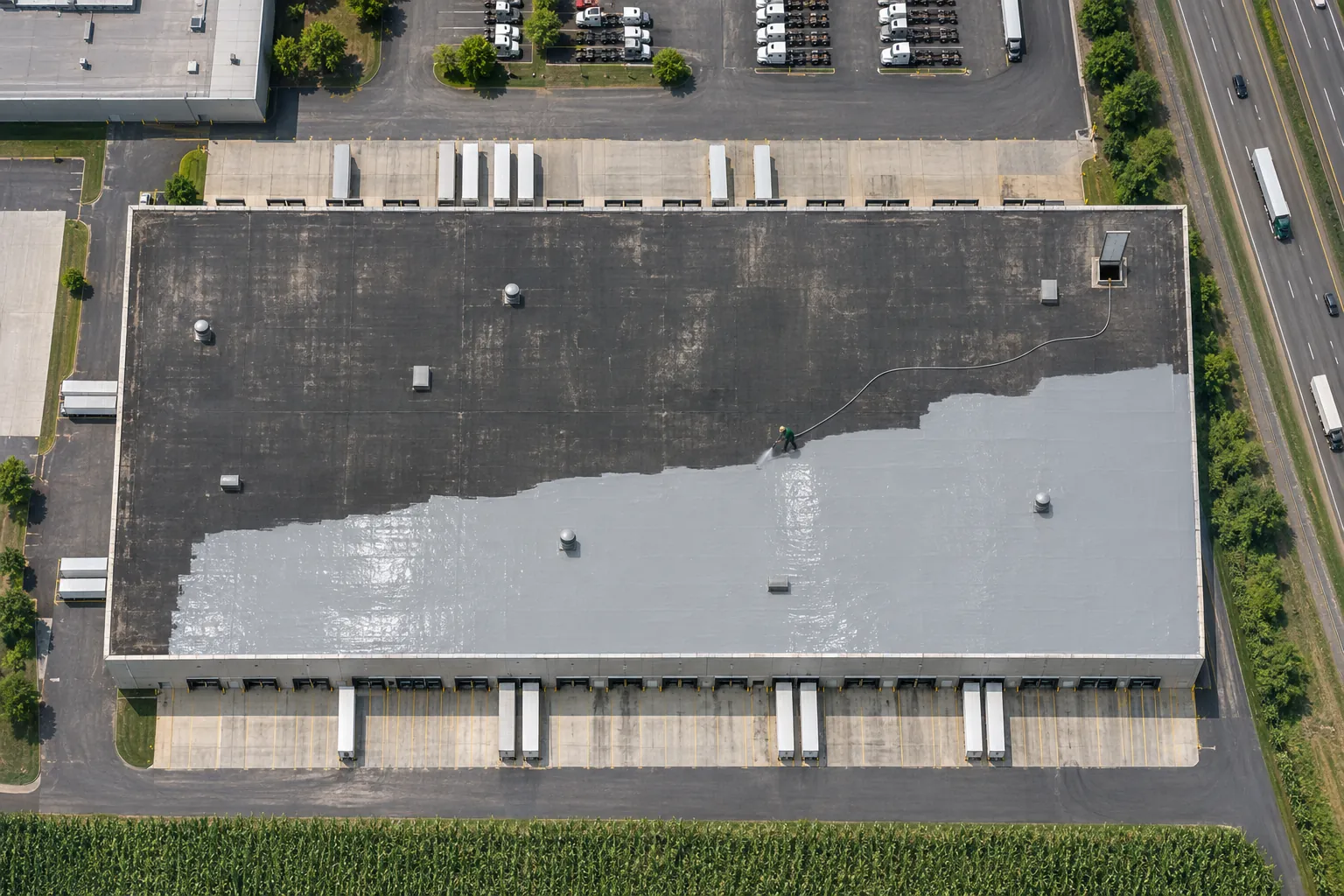
A common topcoat over cured foam.
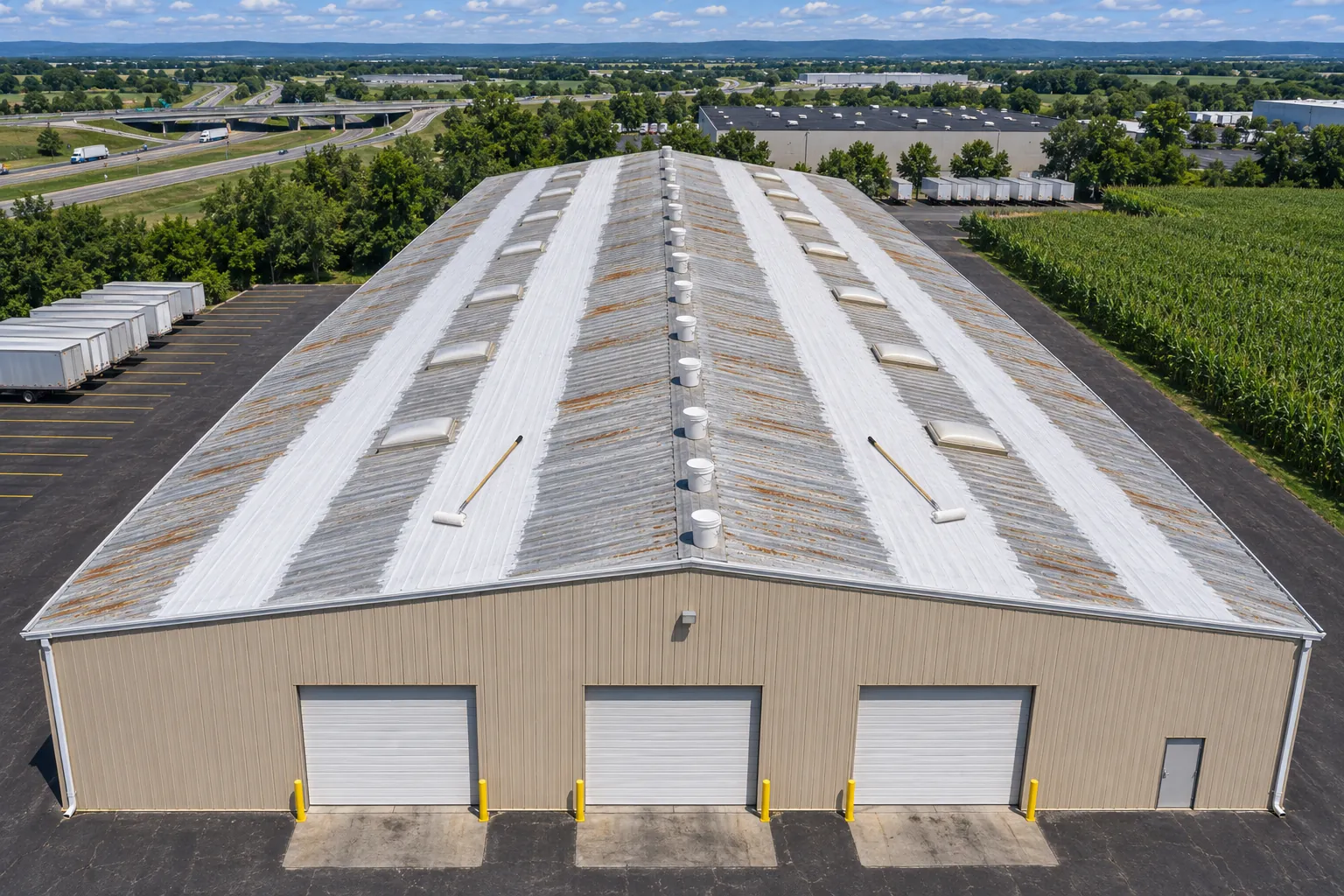
Another topcoat option where water runs off.
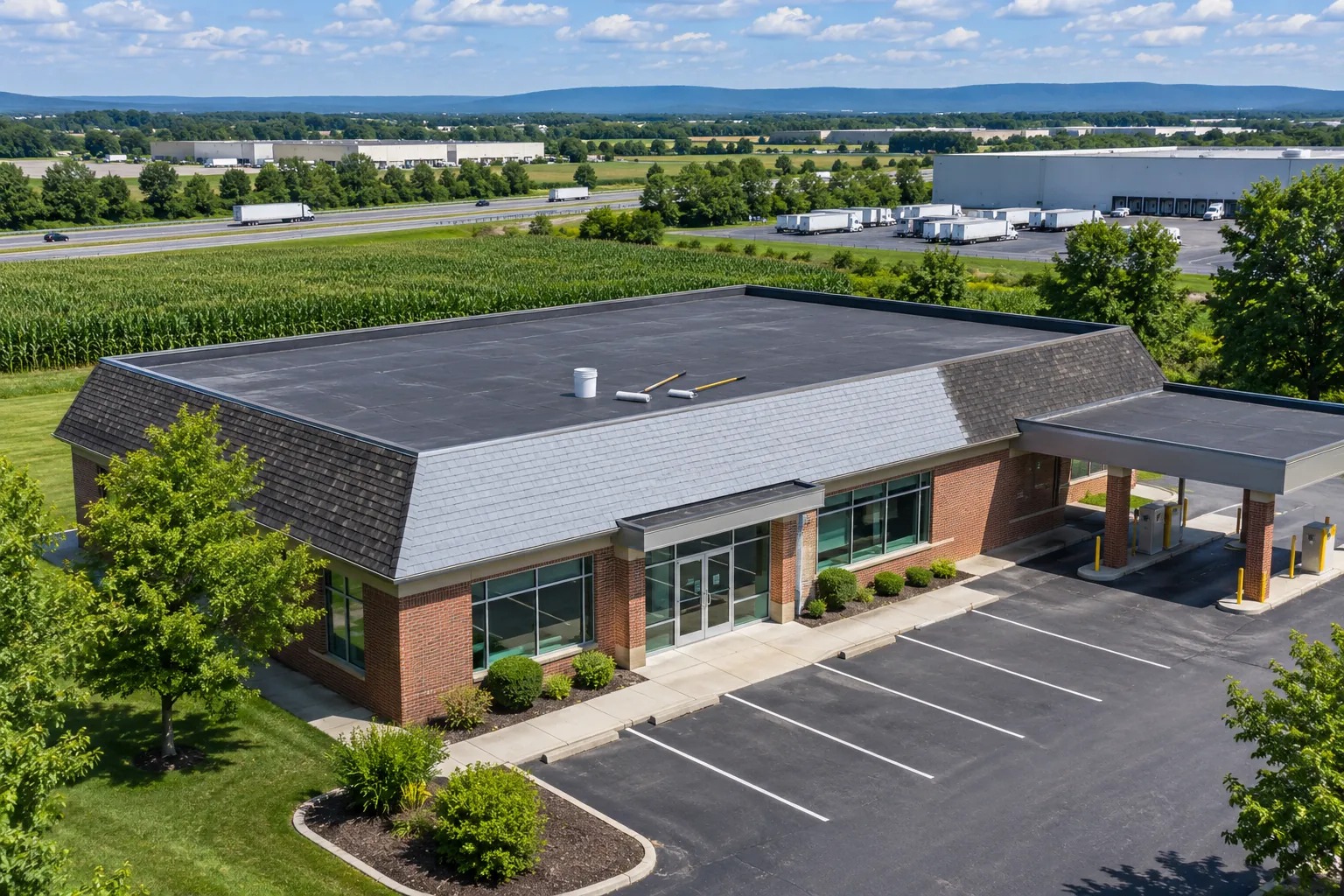
Shingle faces on mixed-roof buildings.
Pros: added insulation, one continuous surface over seams and fasteners, and light weight. Cons: careful overspray control, weather limits on spray days, and a topcoat that needs renewal. An operating plant weighs both against its intakes and service routes.
Foam depends on its topcoat. Punctures and worn coating let UV and water into the foam. Installation needs calm, dry weather, and overspray planning around intakes and vehicles adds work.
Yes, over firm, attached, dry panels. Foam fills the ribs and covers the fasteners. Loosely attached or rusted-through metal is fixed or replaced first, because foam does not turn it into a reliable base.
Not until the attachment is confirmed. We check the panels, supports, and old finishes. Covering loose or deteriorated metal leaves the new foam riding on it.
Only when the foam itself is firm and dry. Damaged or wet foam is cut out and repaired first. A new topcoat over punctures, moisture, or separation hides the problem.
Look for exposed foam, worn spots on walk paths, and cracks around curbs. An inspection measures remaining coating and marks the spots to repair.
More than coating alone, since foam adds an insulating layer under the topcoat. The planning figure depends on foam thickness, prep, overspray protection, and the topcoat chosen.
Dry surfaces, mild temperatures, and calm wind. Moisture ruins adhesion, and wind carries overspray. Spray days get picked from the forecast, and work stops when conditions turn.
Foam can be built thicker toward drains to improve slope in some areas. Clogged outlets and sagging deck still need their own repairs first.
Very little for the insulation it adds. Foam is light, though the topcoat and any added thickness still count, so the existing structure is reviewed before an overlay is recommended.
Get a ballpark range for your roof, or call to talk through insulation, overspray, and timing.