This service
Silicone
- Slope
- Low slope and flat areas
- Slow drainage
- Holds up once outlets are fixed
- Cure
- Cures in damp air, cooler days
- Dirt pickup
- Holds dirt; rinse before recoat
- Future recoats
- Silicone only, cleaned first
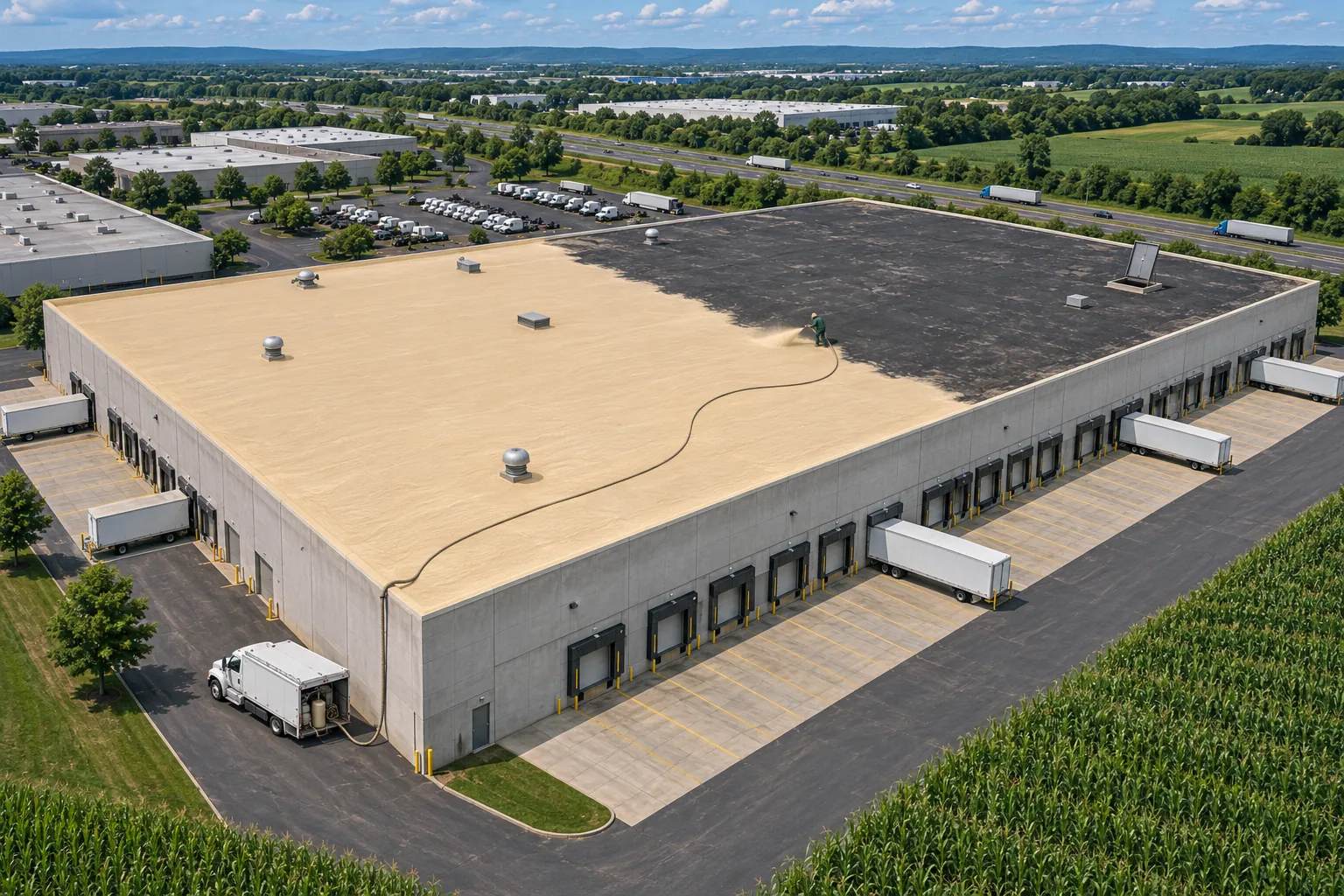
As an Allentown silicone roof coating contractor, we coat low-slope metal and membrane roofs after fixing drainage, wet spots, and failed seams.
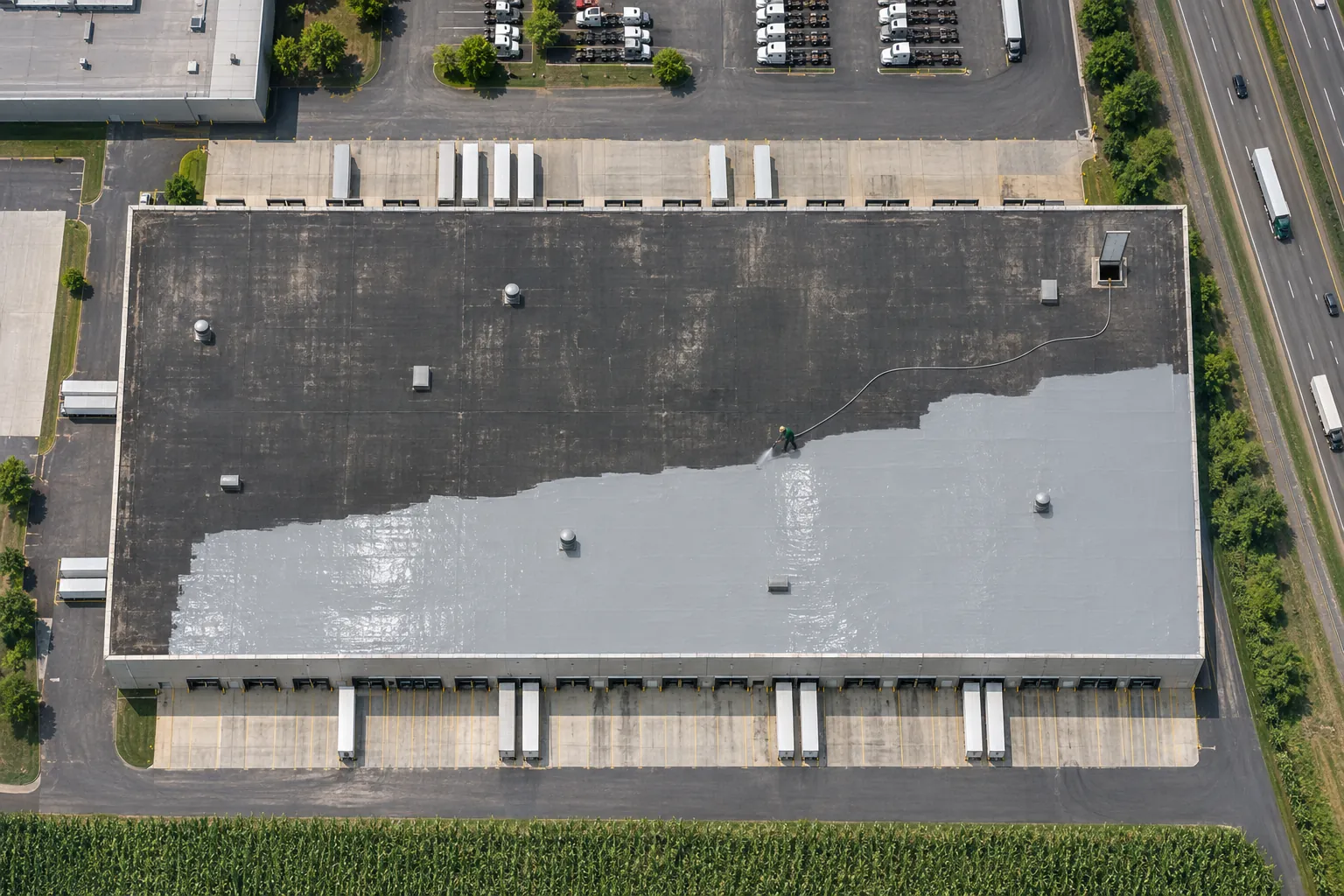
Allentown silicone roof coating works best on low slopes with dry insulation. Here is how it compares with acrylic on the same roof.
Silicone goes over flat and low-slope roofs, so the problems ahead of it are mostly about water and adhesion.
Leaves, grit, and ice debris narrow drains and scuppers until water backs up. Outlets get cleared and repaired before coating. Strainers go back on so leaves stay out of the drain.
A ring of dirt marks where water sat for days. We check whether panels or deck have sagged under it and correct what we can. Shims or deck repairs follow where the steel has sagged.
Soft spots underfoot often mean wet insulation. Those sections are cut out and replaced so silicone is never trapping water. New insulation goes in dry and fastened before coating.
Older asphalt-based coatings can stain silicone from below. A blocking primer goes down first when testing shows bleed. A small test square shows bleed within a day or two.
Lifted edges on single-ply seams are re-adhered and reinforced, because silicone bridges the seam but cannot glue it shut. Seam edges get fabric before the silicone coat.
Silicone is slick when wet and wears along walked lines. Walk pads or a granule surface go on the routes to equipment. Granules give boots grip on the coated roof.
Silicone jobs differ by what lies underneath and how water moves. These are the variations we choose between.
Silicone over primed steel on low-pitch metal roofs, with fastener caps and lap fabric bedded in first. Lap fabric goes in before the silicone coat.
Cleaned and primed TPO or EPDM gets silicone after its seams are checked and loose edges are re-adhered. Seams get primed after cleaning.
Existing silicone is washed, tested for adhesion, and recoated with silicone at the thickness the old film lost. Washing removes dirt that would block adhesion.
Extra film and fabric around drains and scuppers, where water collects longest after a storm. Fabric there resists the longest wet periods.
Roofing granules broadcast into wet silicone along service routes for footing and wear. Routes to rooftop units get the most granules.
On the right low-slope roof, silicone closes the failure points and stays flexible through Lehigh Valley winters.
Call us before it freezes into the seams. We will check the drains and outlets first and tell you what is holding the water.
These four calls decide whether silicone goes on and how much of it.
Drains, seams, laps, curbs, and the condition of whatever finish is on the roof now. We probe soft areas and check the deck from below.
Blocked outlets, sagging deck, or debris at the edge each have their own fix. Silicone is never the drainage repair itself.
Adhesion tests and bleed checks on the existing surface tell us whether a primer goes down first and which one the product calls for.
Silicone handles cooler, damper days than acrylic, but the roof surface and seams must be dry and dew-free when it goes down.
The product sheet sets the dry thickness. Silicone usually goes on in one heavy pass, with extra film and fabric around drains, curbs, and seams.
Owners weighing silicone often look at these services for other parts of the same building.
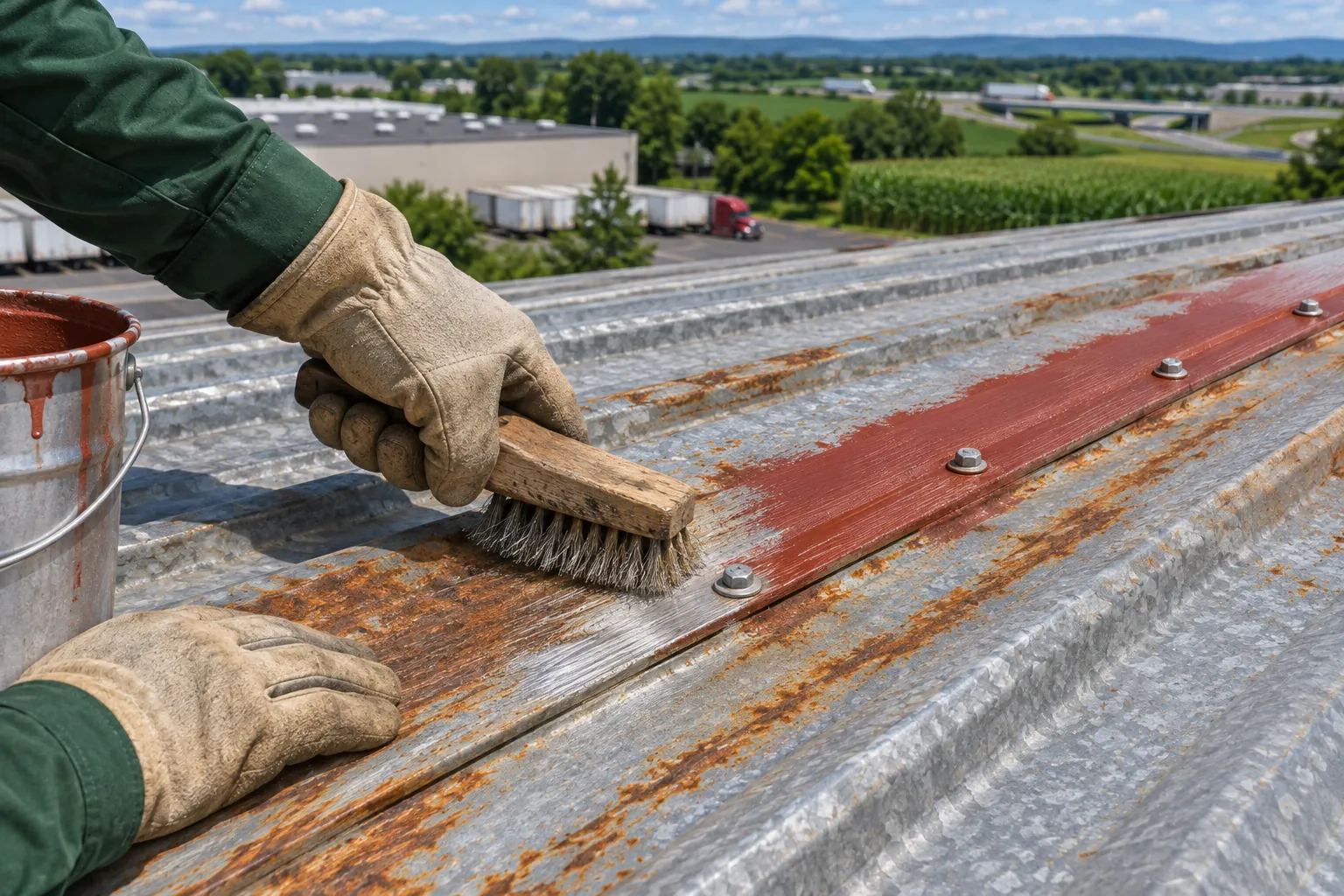
Full rust, fastener, and lap work on steel panels.
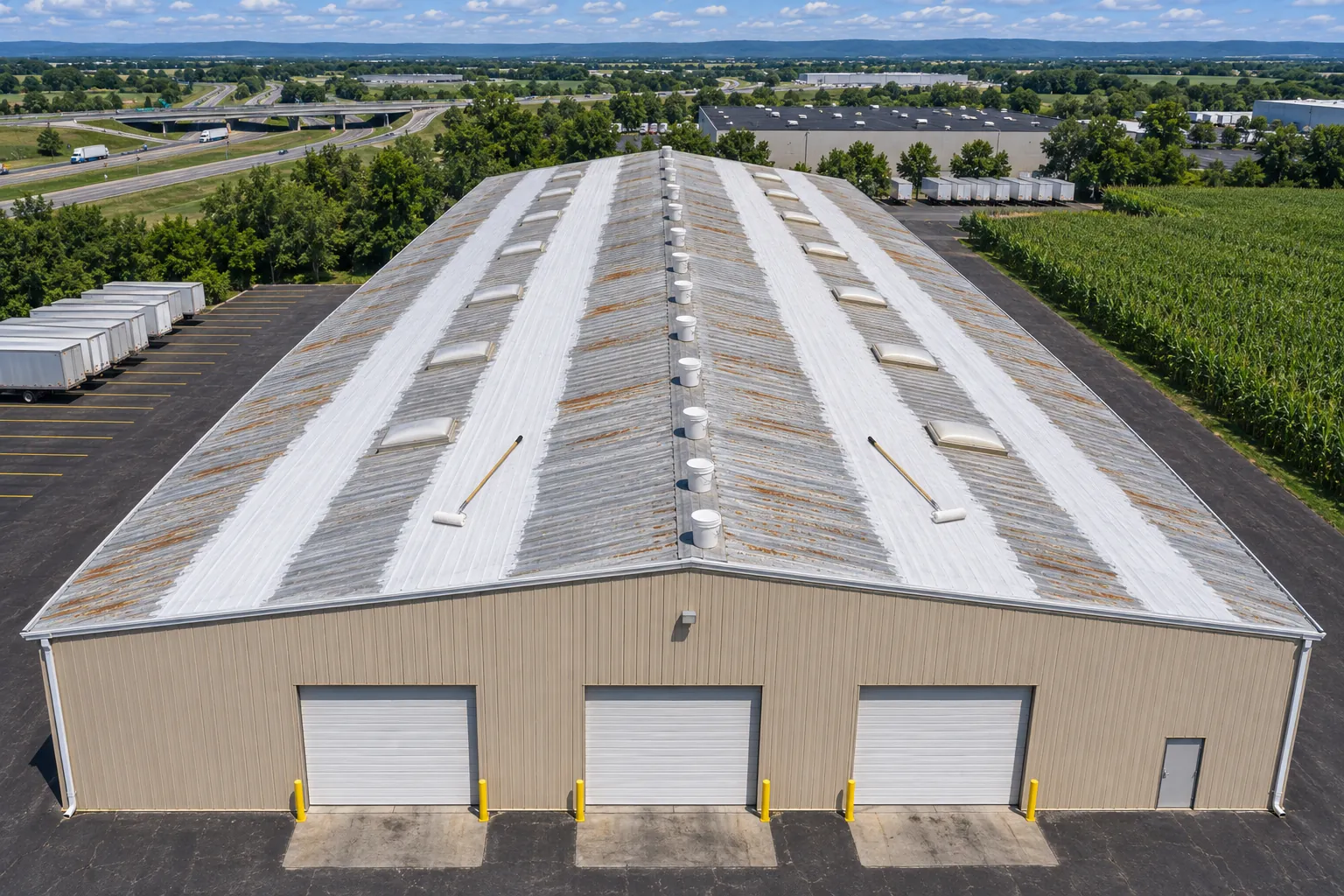
The water-based choice for well-drained pitches.
Continuous insulation under a silicone or other topcoat.
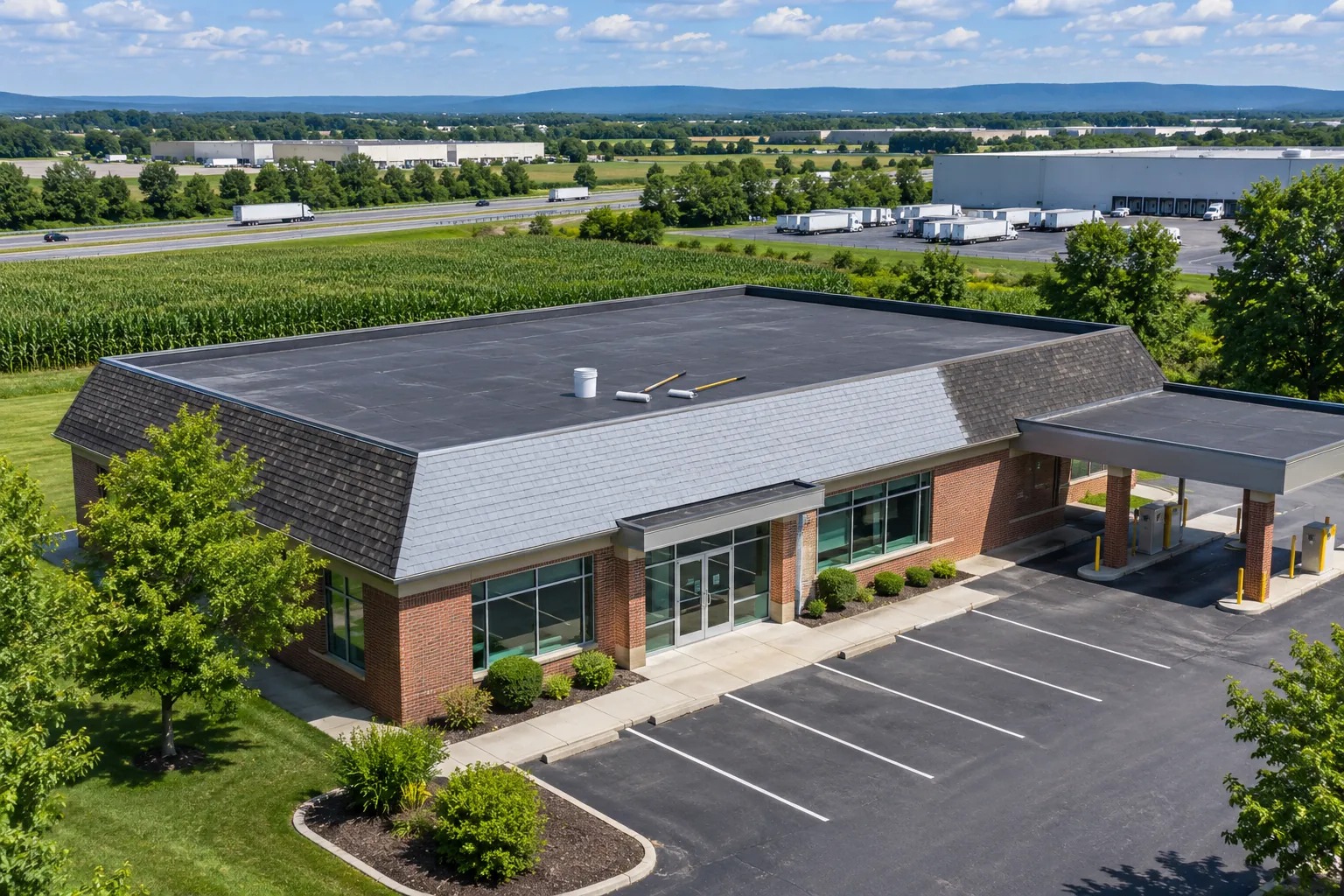
Asphalt shingle sections that pass inspection.
Yes, on low-pitch metal roofs with firm panels. Silicone handles slow drainage and stays flexible in cold weather. The panels still need rust treatment, fastener work, and sealed laps first; silicone protects the surface but cannot fix attachment or wet insulation.
That depends on its installed thickness and what happens afterward. Watch for lost adhesion, worn spots at moving details and walk paths, and thin coverage. We separate those from surface dirt during inspections, since dirt alone is cosmetic.
A metal roof alone does not decide it. Drainage, the existing finish, application weather, and future repairs do. Silicone favors low slopes and slow runoff; acrylic favors pitched panels. Either needs proper prep and detail work.
No. Acrylic will not bond to silicone. Plan on silicone for every future recoat, after washing the old surface and confirming adhesion.
Silicone tolerates standing water better than acrylic, but it does not make recurring puddles harmless. We inspect outlets, panel deflection, and debris to find why water stays, fix that, and only then coat.
Wet sections get cut out and replaced first. Coating over wet insulation traps the water, which keeps the deck rusting from below.
When wet, yes. That is why routes to rooftop units get walk pads or granules broadcast into the wet coating. Technicians should keep to those paths, which also protects the coating from wear.
Coating plans start around $2.50 to $4.00 per square foot. Drain repairs, wet insulation replacement, primer for bleed-through, and the number of curbs and seams move the number on a given roof.
A rinse helps. Silicone holds airborne dirt, which dulls its reflectivity. Washing before an inspection shows the true film condition, and any recoat must start from a clean surface.
Tell us about the low-slope roof and where water sits, or call to schedule a look at the drains and seams.