Dripping On Dry Days
Water falling from the deck on cold, dry mornings points to condensation. Rain leaks show up during or right after storms instead. Moisture readings taken on both kinds of days settle it.
As a Northampton metal roof coating contractor, we separate condensation from real leaks on equipment roofs, then repair and coat the panels.
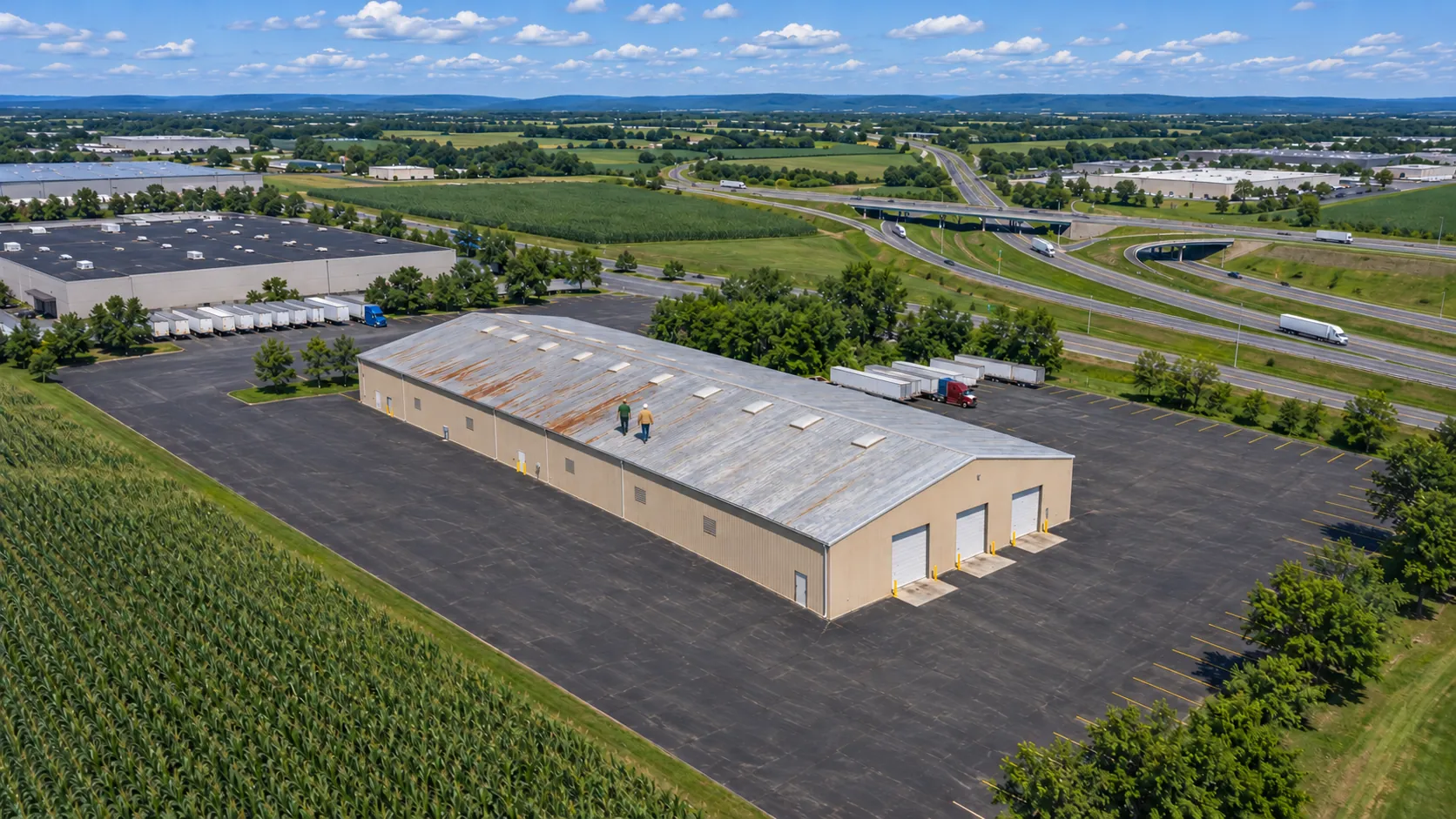
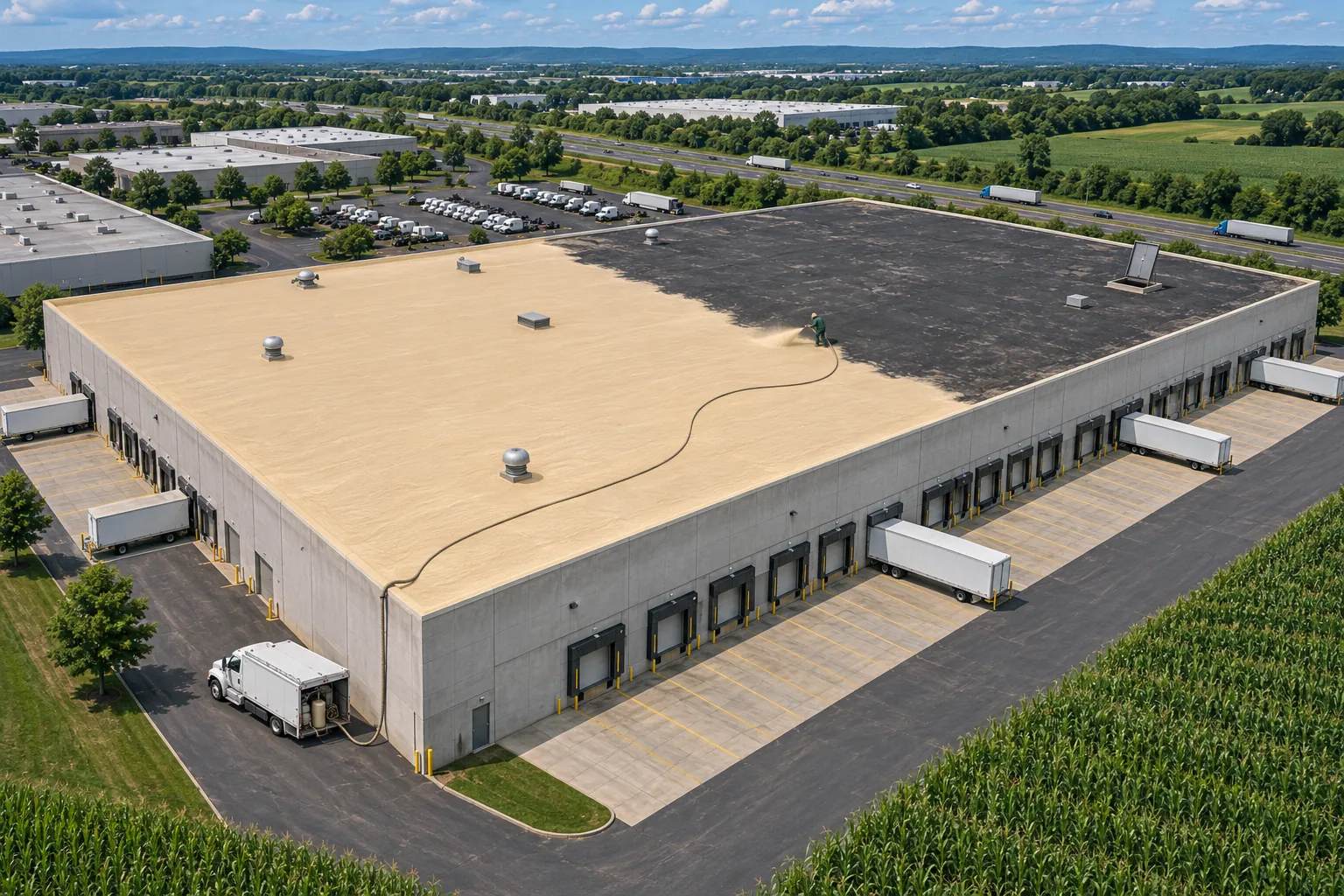
Water dripping inside a Northampton equipment building is not always a roof leak. Our Northampton metal roof coating work starts by comparing where moisture shows up underneath with the weather, the ventilation, and what the building holds. Warm, damp air meeting cold steel forms water on the underside, and an exterior coating cannot stop that.
Leaks and condensation get separate fixes.
Rain leaks get repaired and coated like any metal roof. The condensation side gets its own notes for the owner: vents that are blocked or missing, equipment that puts moisture into the air, and panels where foam insulation would keep the steel warmer overnight. Both lists come with the estimate.
Equipment and storage buildings put moisture under the roof as well as on top of it. These are the conditions we sort.
Water falling from the deck on cold, dry mornings points to condensation. Rain leaks show up during or right after storms instead. Moisture readings taken on both kinds of days settle it.
Steady condensation rusts panels from the inside, often along purlins. Those panels get checked for thickness before coating is discussed. Thinned panels are replaced rather than coated.
Closed-up storage with running engines or wash water builds humidity. Vents and exhaust are reviewed alongside the roof. Owners decide the inside fixes; we note what we see.
Many roofs have both problems. Lap and fastener leaks get repaired and coated while the moisture source inside is handled separately. Rain leaks get fixed regardless of what happens inside.
Faced insulation under panels can trap condensation. Sagging or stained facing is a sign the panels above need a closer look. Replaced facing is part of any panel swap.
Uninsulated panels stay cold overnight and collect water underneath. Owners sometimes weigh foam for its insulation here. Foam brings those panels closer to room temperature.
Once leaks and condensation are separated, the coating handles the outside of the roof and the plan covers the inside.
Northampton equipment roofs usually take one of these paths once the moisture is sorted.
Laps, fasteners, and curbs repaired and the field coated, with ventilation changes left to the owner. Vents and fans stay the owner's call, with our notes.
Spray foam adds insulation that keeps the steel warmer, then takes a protective topcoat. Topcoat over the foam is chosen by the roof slope.
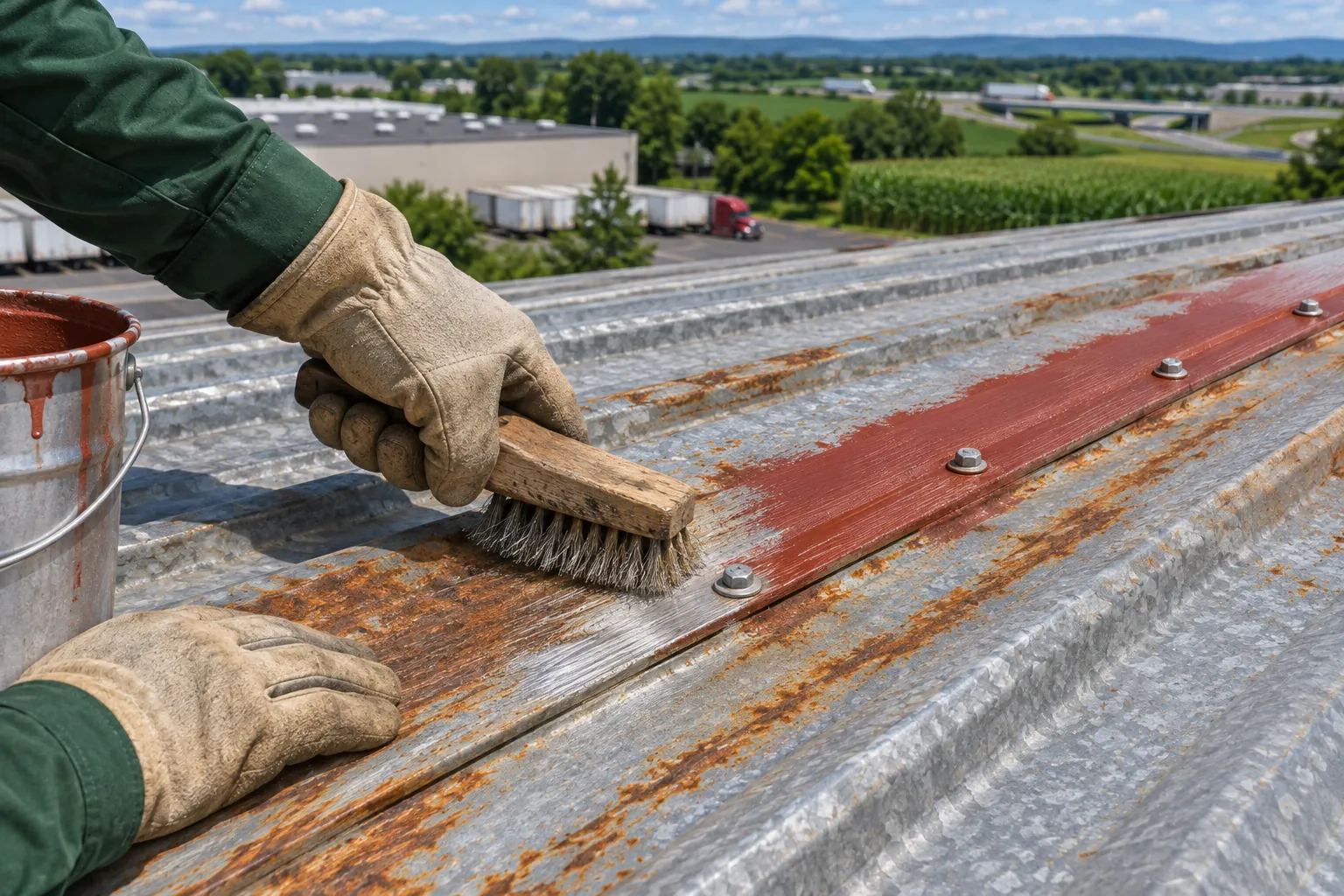
Panels thinned by inside-out rust are replaced before any coating is applied. Replacement panels match the existing profile.
Roof repairs and coating, paired with notes on vents and humidity for the owner to act on. Humidity sources inside get named in writing.
Lap and fastener repairs for buildings where the coating can wait a season. Coating can follow the next season on the repaired roof.
Call us and describe when it drips. Timing tells us whether to look at the roof, the air inside, or both.
Every condensation-prone roof gets these four calls before work is priced.
Topside panels and laps, the underside of the deck, the insulation, and the vents, plus when and where the owner sees water. Underside photos go into the findings.
Drip timing, staining, and rust patterns sort rain leaks from water forming inside. Both can be present. Both can be fixed on the same roof visit.
Leaking laps and fasteners are fixed; panels rusted thin from below are replaced. Replaced panels get new fasteners and sealed laps.
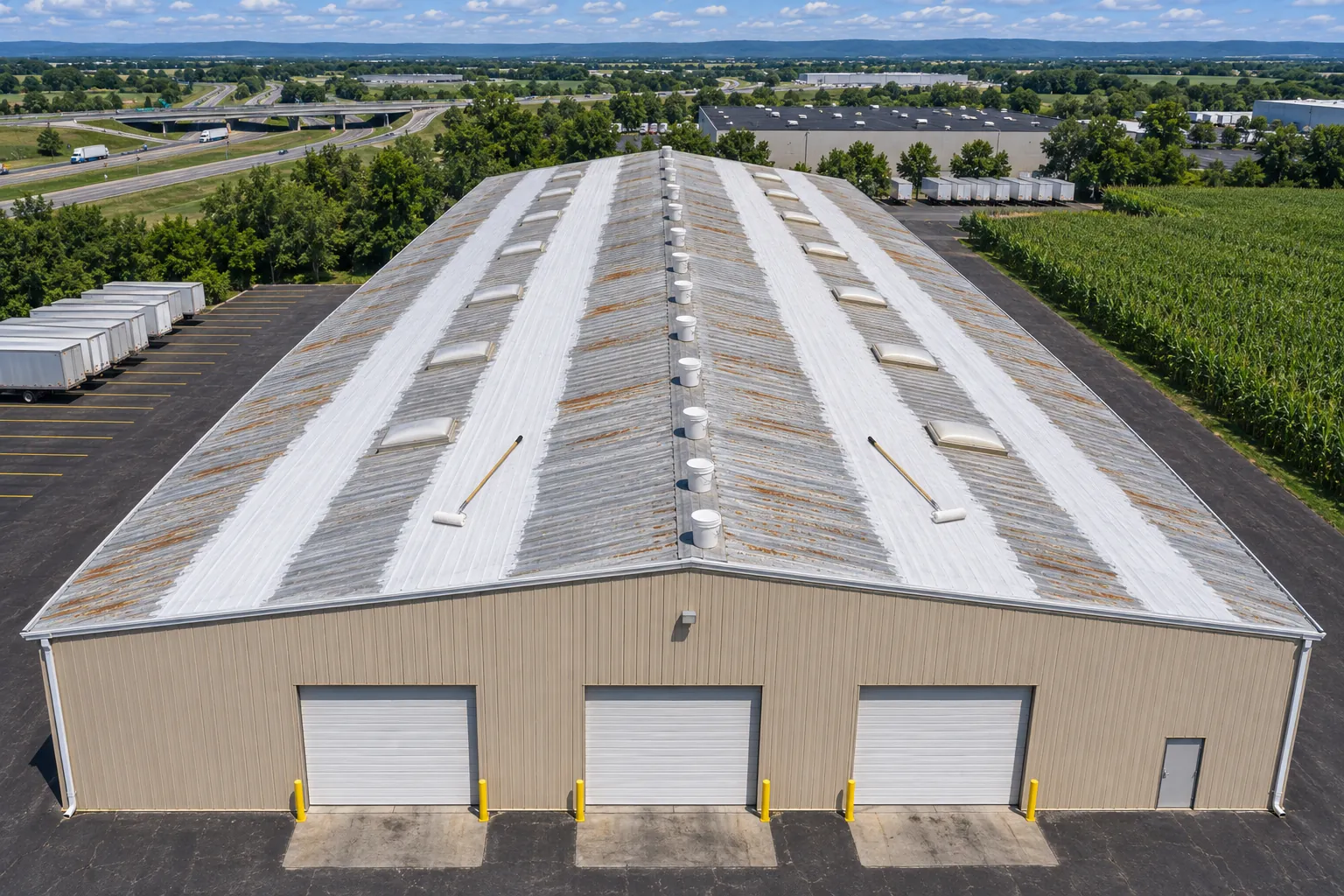
Coating handles the outside surface. Foam adds insulation when cold steel drives the condensation. Foam thickness is set by the insulation the owner wants.
Repairs and coating go on dry days. Ventilation changes inside can be scheduled separately by the owner, before or after the roof work. Interior work never holds up roof repairs.
Is your building beyond Northampton? We coat roofs in these towns too; anywhere else, call us or send us a message.
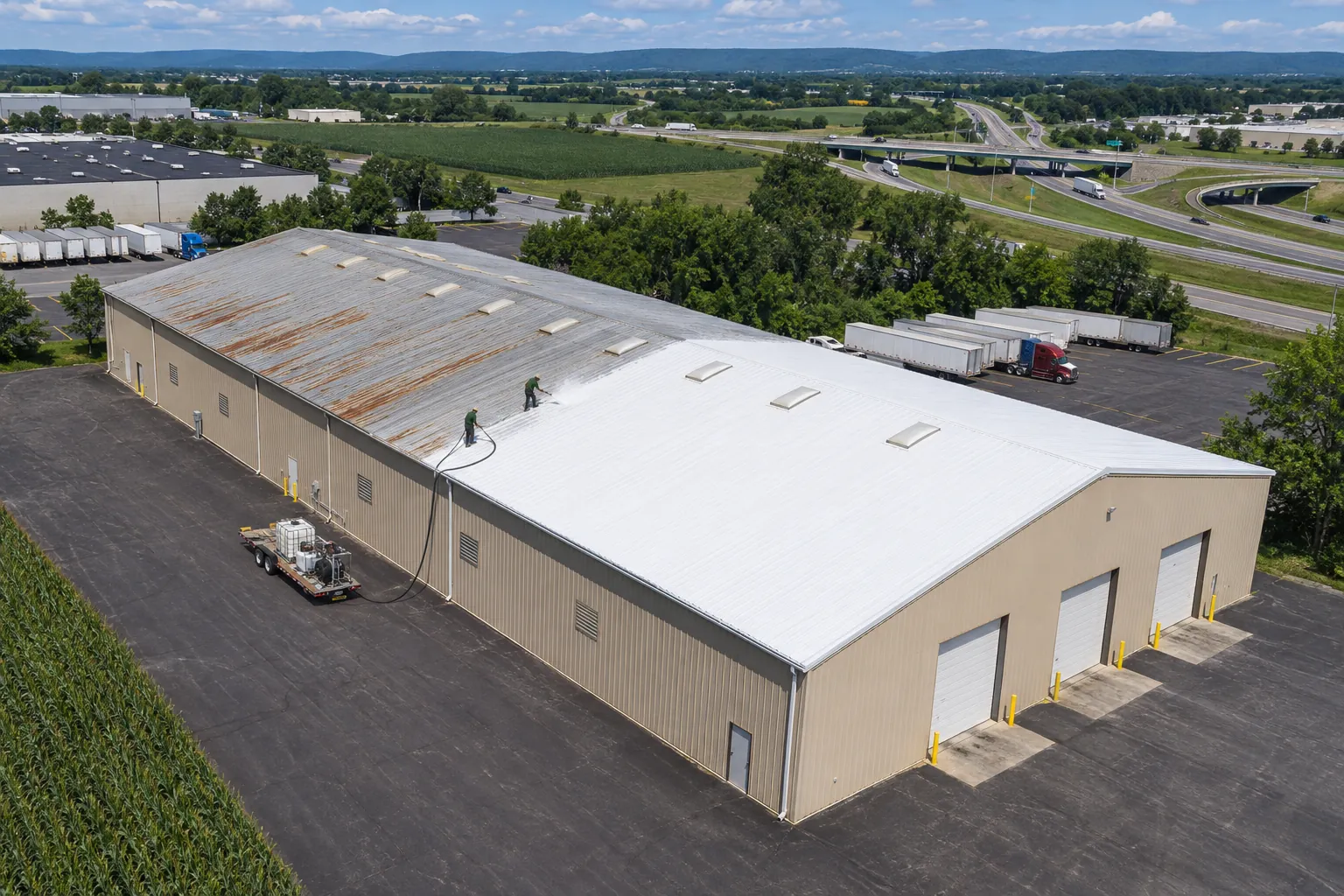
Because water can form under the panels even when the outside looks continuous. We compare underside moisture with ventilation and real leaks, since coating the outside does not fix an indoor moisture source.
No. Condensation forms inside when warm, damp air meets cold steel. Ventilation changes or added insulation address it, while coating handles rain leaks.
Yes. Equipment buildings, shops, storage, and light industrial roofs in Northampton get the same moisture-first inspection before any coating.
If your building is in or near Northampton, call with the address and we will confirm coverage.
We are, for commercial storage and equipment barns. They get panel, fastener, and moisture checks plus a look at ventilation under the metal.
Coating plans run about $2.50 to $4.00 per square foot. Panels replaced for inside-out rust and any foam added for insulation move the total.
Usually. Work happens on top of the roof, and covers go over anything below a section that is opened for panel replacement.
Often. Insulation keeps the underside of the steel warmer, so damp air is less likely to reach its dew point there. Spray foam over the panels is one way to add it during a roof project.
Tell us when and where water shows up, or call to set up a roof and underside check.